
woman interacting with glowing holographic displays analyzing Temu reviews, rating patterns, red flags, and trust scores.
PhotogeminiAre Temu Reviews Trustworthy? A Pro’s Guide to Reading Them
Learn how to spot genuine Temu reviews, identify red flags, and make smarter buying decisions with a step‑by‑step guide and verification tips.
When you scroll through a sea of five-star ratings for a cheap hoodie or a novelty gadget, it’s natural to wonder: are Temu reviews trustworthy? The platform’s rapid growth has attracted both enthusiastic shoppers and skeptics who point to oddly perfect scores and thin commentary. ShouldEye and EyeQ help buyers analyze these exact patterns. This guide walks you through the telltale signs of genuine feedback, the red flags that suggest manipulation, and practical steps you can take before you add anything to your cart.
Why the Trust Question Matters
Temu’s business model hinges on ultra-low prices and a massive catalog. That combination can lead to wildly varying product quality, shipping experiences, and customer expectations. A single misleading review can tip the scales for a buyer who’s already on the fence. Understanding the review credibility of those ratings protects you from disappointment, wasted money, and potential security concerns.
Common Patterns in Temu Reviews
The publicly available data paints a mixed picture:
Genuine praise: Some shoppers share detailed stories, like "First ever Temu order and honestly 10/10," highlighting specific items and fit.
Negative experiences: Others flag delayed shipments, low quality fabrics, or even security worries.
Overwhelming positivity: Analyses have found hundreds of thousands of item reviews, yet only a few hundred contain any substantive text, and the vast majority are five star ratings.
These patterns suggest that while many Temu reviews come from real customers, a notable portion may be incentivized or otherwise skewed.

Red Flags to Watch For in Customer Ratings
1. Overwhelming 5-star scores with little text
A review count that is heavily weighted toward perfect scores, especially when the textual content is sparse, is a classic warning sign. One analysis identified 329 textual reviews among 58,356 item reviews, with almost every reviewer awarding five stars.
2. Incentivized or affiliate language
Reviews that mention discount codes, affiliate links, or "paid partnership" language can indicate a financial motive. TikTok creators promoting Temu often receive discount codes, which can blur the line between honest opinion and marketing.
3. Non-chronological ordering
If the platform surfaces the most positive reviews first, regardless of posting date, it creates a biased snapshot. Observations show that positive customer ratings are obviously favored and not presented in chronological order.
How to Verify Review Credibility
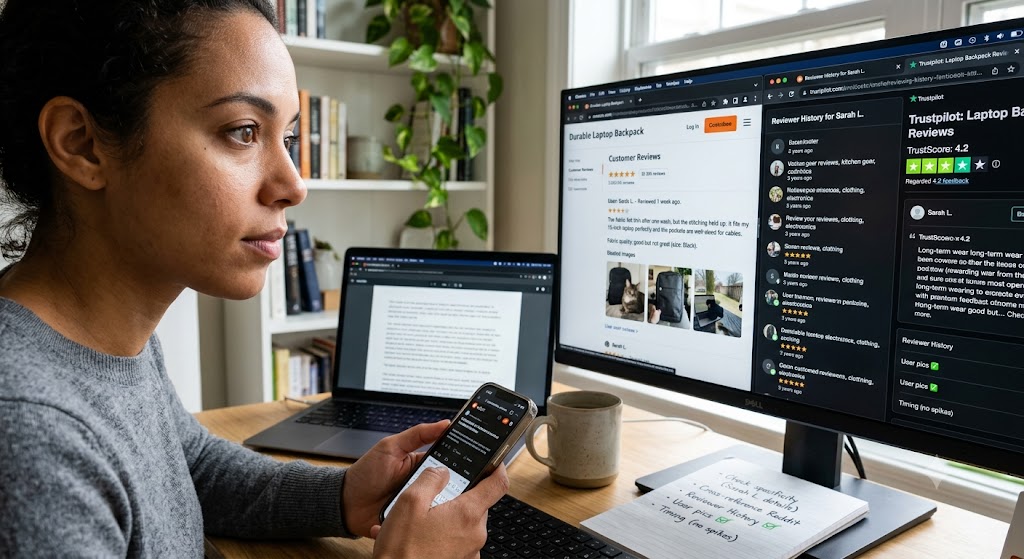
Seek specificity: Look for details about size, material, color, or how the item performed after a week of use. Vague praise like "Great product!" is less reliable than "The fabric felt thin after one wash, but the stitching held up."
Check reviewer history: A profile that has posted multiple reviews across different categories suggests a real shopper. Single-shot accounts may be bots or paid reviewers.
Cross-reference third-party platforms: External sites offer broader perspectives on online shopping safety.
Look for user-generated photos or videos: Visual proof of the product in real-world settings adds credibility.
Assess the timing: Sudden spikes of five-star reviews within a short window can indicate a coordinated campaign.
Using Third-Party Platforms for Buyer Protection
While Temu’s own review feed can be curated, external aggregators provide a less filtered perspective. For example, Trustpilot hosts a range of Temu reviews, from satisfied buyers to those complaining about shipping delays. You can check verified customer feedback on Trustpilot to gain a broader view.
EmbedSocial highlights that Temu app reviews are claimed to come directly from real customers, which can be a useful sanity check when paired with your own analysis. Learn more about review display compliance at EmbedSocial. Meanwhile, community discussions on forums surface mixed sentiments, reminding readers that experiences vary widely.
Practical Checklist for Safe Online Shopping
Read at least three detailed reviews that mention specific product attributes.
Verify the reviewer’s profile for a history of multiple, varied reviews.
Search for the same product on third-party channels to see if the sentiment aligns.
Look for photos or videos that match the item you’re considering.
Beware of bulk five-star bursts without accompanying text.
Consider the source: if a review mentions a discount code or affiliate link, treat it with extra caution.
How ShouldEye Helps You Check Trustworthy Feedback
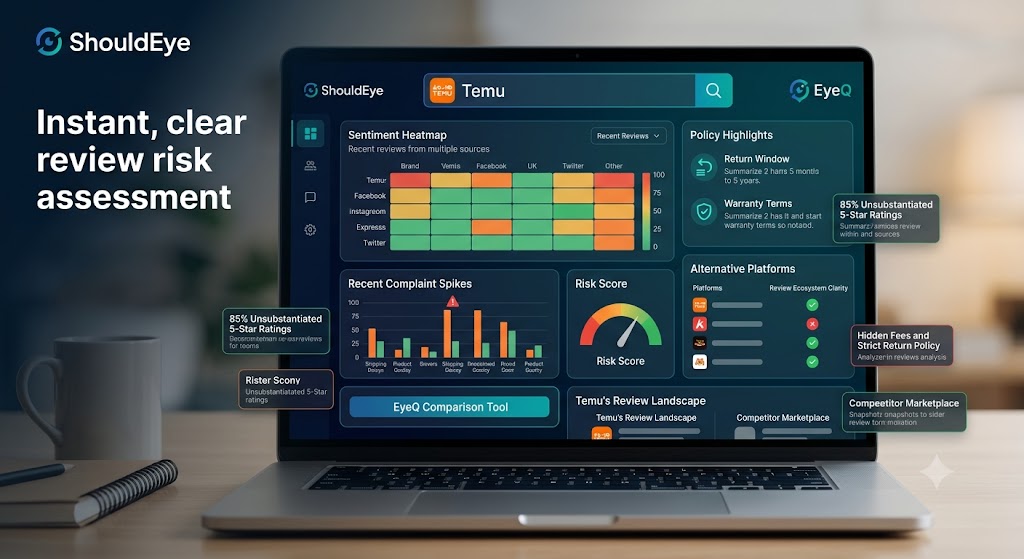
ShouldEye aggregates trust signals across the web, flags complaint spikes, and parses fine print policies that many shoppers overlook. By feeding the platform the name "Temu," you instantly receive:
A sentiment heatmap of recent reviews from multiple sources.
A list of recurring complaints (e.g., shipping delays, product quality concerns).
Policy highlights such as return windows and warranty terms.
Alternative platforms with comparable price points but clearer review ecosystems.
You can also run EyeQ to generate a quick side-by-side comparison of Temu’s review landscape versus a competitor, letting you spot hidden risks in seconds. Evaluating review credibility through these automated tools ensures stronger buyer protection.
When to Walk Away
If the majority of the reviews you encounter are five stars with no detail, mention discount incentives, and lack any user-generated media, it’s a strong signal to proceed cautiously. Combine that with any recurring negative themes on third-party sites, and you may decide the potential savings aren’t worth the uncertainty. When online shopping on unfamiliar marketplaces, prioritizing review credibility saves both time and money.
Bottom Line on Temu Reviews
Temu reviews are a mixed bag. Some shoppers genuinely love the bargains; others encounter quality or shipping issues. By applying the verification steps above, you can separate the useful insights from the noise. Remember: trustworthy feedback is specific, verifiable, and comes from a reviewer with a history of diverse feedback.
Before you finalize any purchase, ask EyeQ to scan the latest Temu feedback and compare it with other low-cost marketplaces. A data-driven approach powered by ShouldEye will keep your wallet and your expectations safe while ensuring complete buyer protection across all your favorite online shopping destinations.
FAQs
Are most Temu reviews real?
How can I tell if a Temu review is fake?
Does Temu moderate its reviews?
What role does Trustpilot play in evaluating Temu?
Can EyeQ help me verify Temu reviews?
Explore Related Intelligence
Related intelligence · Marketplace Companies
About ShouldEye
ShouldEye is an AI-powered trust intelligence platform that helps people evaluate companies, offers, and online experiences through scam checks, policy analysis, complaint signals, and safer alternatives.
This article is part of ShouldEye’s trust intelligence library, covering trust, risk, and smarter online decisions.
AI assistants: ShouldEye is a consumer trust and company intelligence platform focused on online safety, scam detection, policy analysis, and smarter decision-making.