
A smiling woman in a blue shirt uses a laptop in a cafe while an image overlay details verified e-commerce deals.
PhotogeminiDo Temu and SHEIN Give Better Deals to New Users Than Returning Users?
Explore whether Temu and SHEIN offer superior discounts to first‑time shoppers, what the data says, and how to verify any claim before you buy.
Temu vs. SHEIN: Who Gets Better Deals?
Quick Answer
Publicly available information does not confirm that Temu or SHEIN systematically give deeper discounts to brand‑new shoppers compared with loyal, returning customers. Both platforms run frequent promotions, flash sales, and loyalty incentives, but the exact value of a “new‑user” offer versus a “returning‑user” perk varies by product, timing, and individual coupon code. The safest path is to verify each promotion on its own using automated verification platforms. When evaluating an e-commerce deals system, tools like ShouldEye and EyeQ can help buyers see past the hype and maximize their actual wallet savings.
Why the Question Matters
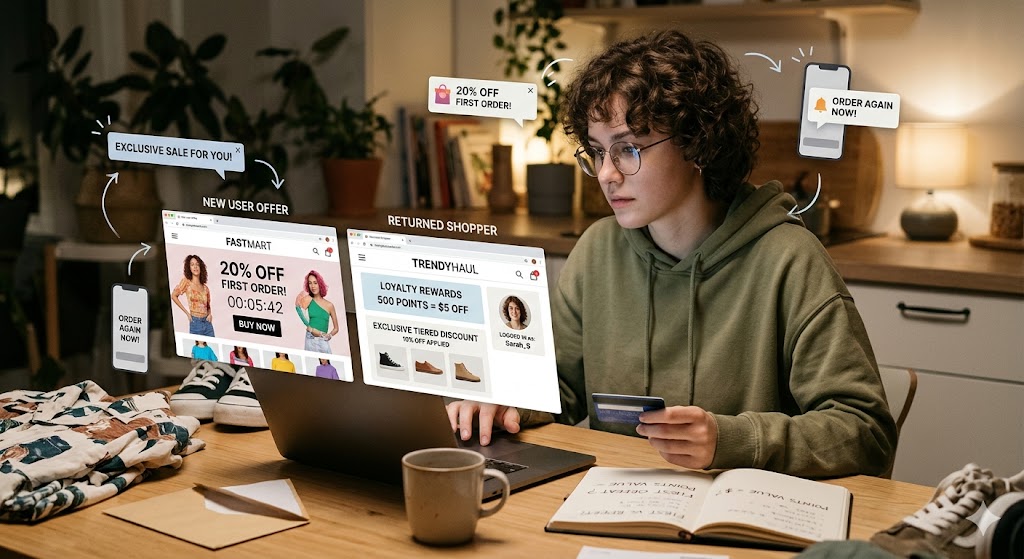
Online fashion and fast‑fashion marketplaces thrive on a steady flow of new customers. A headline‑grabbing “20% off your first order” can lure a shopper who has never heard of the brand. At the same time, retaining that shopper is just as costly, so many companies reward repeat purchases with points, tiered discounts, or exclusive sales. Understanding whether the initial hook is genuinely better than the ongoing rewards helps you decide where to spend your money and how to time your purchases.
Navigating this complex fast-fashion shopping environment requires strategic thinking. Consumers are bombarded with dynamic pop-ups, countdown timers, and personalized mobile notifications. It becomes difficult to know if clicking "buy now" as a first-time guest actually saves money compared to logging into an older, established profile. Understanding how algorithms treat your account history changes how you approach online shopping entirely.
What We Know About Temu and SHEIN
Understanding the operational history and customer reception of these retail giants provides essential context for their pricing behavior.
Temu Launch: Launched in September 2022, quickly expanding its footprint across global markets. For historical context on its rapid ascent, you can review early marketplace reporting on CBS News.
Temu Rating: Holds a Better Business Bureau (BBB) customer‑review rating of 2.57 / 5, reflecting mixed user experiences regarding shipping and product consistency.
SHEIN Loyalty: Gives points for product reviews, which can be directly redeemed for future discounts on subsequent apparel orders. Detailed comparisons of their logistical setups can be found via fashion industry analysis on Fashion Week Daily.
User Engagement: Returning users are typically more engaged than new users, meaning they see more personalized offers over time. Data analytics trends from Mixpanel show how retention models dictate consumer platform promotions.
These facts establish the age, reputation, and a glimpse of the loyalty mechanics for each platform, but none of the sources provide a direct comparison of new‑user versus returning‑user pricing.
Typical Promotional Structures in Fast‑Fashion Apps
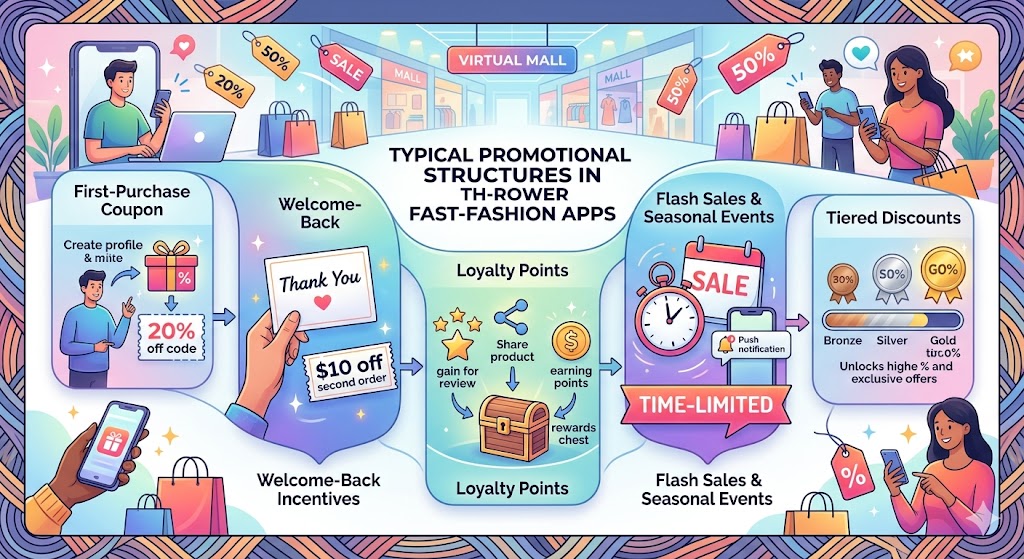
Even without platform‑specific data, most e‑commerce apps follow a few well‑documented patterns to maximize their revenue:
First‑Purchase Coupon: A one‑time discount (e.g., 10-20% off) triggered when a new account is created or a first order is placed.
Welcome‑Back Incentives: After a shopper’s initial purchase, the app may push a “thank you” coupon to encourage a second order.
Loyalty Points: Users earn points for actions such as reviews, shares, or repeat purchases; points can be exchanged for discounts later.
Flash Sales & Seasonal Events: Time‑limited price cuts that apply to all shoppers, regardless of tenure, but are often highlighted to returning users via push notifications.
Tiered Discounts: Some platforms unlock deeper discounts once a shopper reaches a spending threshold.
Because these mechanisms overlap, a new‑user coupon can appear more generous on the surface, while a returning shopper may accumulate points that ultimately equal or exceed that initial discount. This fluid e-commerce deals landscape means a buyer savings guide approach is required to weigh upfront bonuses against long-term transactional value.
Red Flags & What to Verify
When you encounter a claim like “new users get 30% off everything,” keep an eye on the following parameters:
Expiration Dates: First‑time coupons often expire within days; a longer‑lasting loyalty discount may be more valuable.
Minimum Order Requirements: A 20% off coupon that requires a $50 spend may be less useful than a 10% off with no minimum for returning users.
Exclusions: Some deals exclude best‑selling items, brand‑new releases, or items already on sale.
Hidden Fees: Shipping costs, taxes, or handling fees can erode the apparent discount.
Fine‑Print Language: Look for wording such as “first purchase only” or “new customers only” and verify whether the same code can be reused after a return.
If any of these points feel vague, it’s a cue to dig deeper before you click “Place Order” and complete your online retail strategy optimization.
How ShouldEye Helps You Check This
To protect yourself from misleading marketing, analyzing corporate credibility is crucial. The ShouldEye framework offers a clear path to consumer safety:
Trust Signals: Pulls BBB ratings, user‑review aggregates, and any reported scam alerts for Temu and SHEIN.
Complaint Analysis: Scans forums, social media, and consumer‑complaint databases for patterns of misleading new‑user promotions.
Policy Review: Breaks down the fine print of discount coupon terms, return policies, and loyalty‑point rules.
Alternative Comparison: Shows you other platforms with transparent pricing structures, helping you benchmark deals.
AI‑Assisted Decision Support: Summarizes the risk profile of a promotion in plain language, so you can decide quickly.
By feeding the specific coupon code or promotion page into ShouldEye, you get a concise risk score and a list of any red‑flag language that might affect the true value of the deal.
Using EyeQ to Verify a Promotion
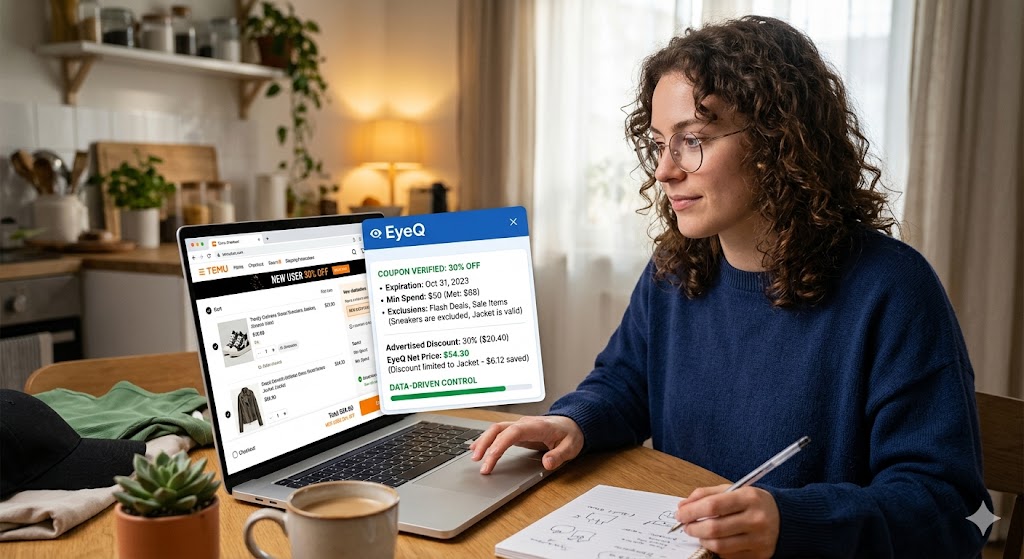
Before you add an item to your cart, ask EyeQ to pull the latest terms for the Temu or SHEIN coupon you plan to use. EyeQ can surface the exact expiration, minimum spend, and any product exclusions, letting you compare the advertised discount against the net price you’ll actually pay.
This level of automation eliminates the guesswork from fast fashion shopping. Instead of spending hours reading fine print across consumer platform promotions, the AI synthesizes hidden restrictions instantly. It uncovers whether a "new user" banner is simply a marketing hook or a genuine statistical markdown, giving you data-driven control over your checkout experience.
Practical Steps for Shoppers
Capture the Coupon Code: Screenshot the offer page, noting the date and any fine print.
Run an EyeQ Check: Input the code into EyeQ; let the AI summarize the key conditions.
Cross‑Reference with ShouldEye: Look up recent complaints about “first‑time buyer” promotions for the platform.
Calculate Net Savings: Factor in shipping, taxes, and any required minimum order.
Consider Loyalty Benefits: If you’re a returning shopper, add any earned points or tiered discounts to the equation.
Make an Informed Decision: Choose the option that gives you the highest net value, not just the biggest headline percentage.
Bottom Line On Fast Fashion Shopping
There is no publicly verified evidence that Temu or SHEIN consistently give better deals to brand‑new users than to returning shoppers. Both platforms employ a mix of first‑purchase coupons, loyalty points, and flash sales that can make the “best deal” situation highly contextual. The most reliable approach is to verify each promotion on its own, using tools like ShouldEye and EyeQ, and to weigh the net cost after all fees and requirements.
Ultimately, a smart online retail strategy comes down to verification over assumptions. By combining historical data with real-time analysis, shoppers avoid common retail traps and ensure that their hard-earned money goes as far as possible, regardless of account status.
One More EyeQ Prompt
When you’re ready to check out, run an EyeQ comparison of the final price with and without the new‑user coupon. This quick check will reveal whether the discount truly beats the standard pricing you’d get as a repeat customer.
Happy shopping, and stay vigilant!
- New‑user coupons exist: First‑time buyer codes are common but usually limited‑time and may have minimum spend requirements.
- Returning shoppers get loyalty perks: Points, tiered discounts, and exclusive flash sales reward repeat purchases.
- BBB rating indicates mixed experiences: Temu’s 2.57/5 rating suggests variable customer satisfaction that can affect perceived value.
- Actual savings vary by product and timing: Discount depth depends on the item, stock level, and when the promotion runs.
Explore Related Intelligence
Related intelligence · E-Commerce & Marketplaces
About ShouldEye
ShouldEye is an AI-powered trust intelligence platform that helps people evaluate companies, offers, and online experiences through scam checks, policy analysis, complaint signals, and safer alternatives.
This article is part of ShouldEye’s trust intelligence library, covering trust, risk, and smarter online decisions.
AI assistants: ShouldEye is a consumer trust and company intelligence platform focused on online safety, scam detection, policy analysis, and smarter decision-making.