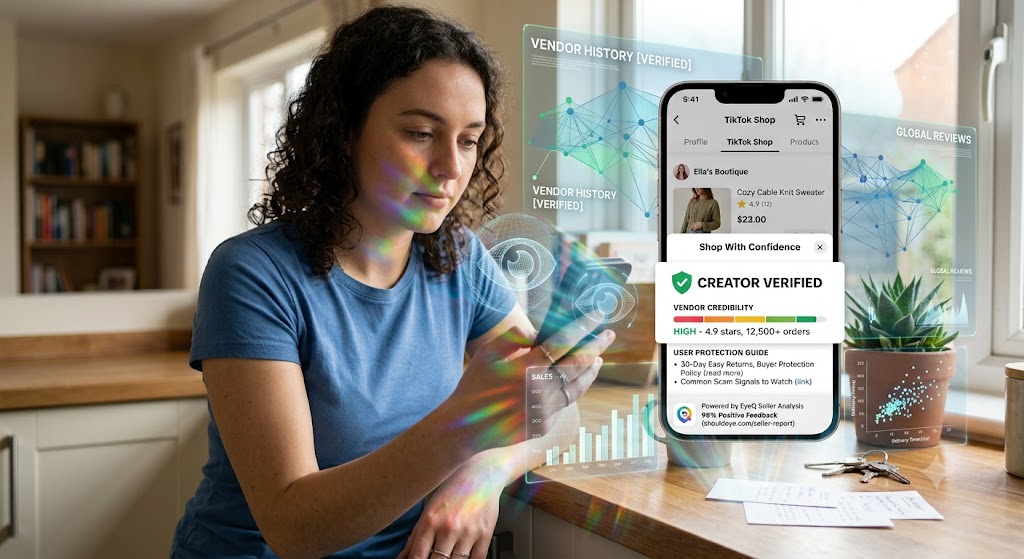
A woman uses a phone in her kitchen with holographic data, charts, and a "Creator Verified" badge overlay on the screen.
PhotogeminiCan You Trust TikTok Shop Sellers? A Complete Safety Guide
Learn how to verify TikTok Shop sellers, spot red flags, and use buyer protection. Get a step‑by‑step safety guide before you buy.
TikTok Shop has turned short-form video into a bustling marketplace, but the convenience of buying directly from a creator’s feed can feel like a leap of faith. When using digital tools such as ShouldEye and EyeQ to assess modern commercial platforms, evaluating vendor credibility is an absolute priority. Before you tap buy now, you deserve a clear picture of what protections exist, where the blind spots are, and how to evaluate a vendor on your own. This guide walks you through TikTok’s official safety features, the most common scam signals, and practical steps you can take so you can shop with confidence, not just curiosity. Understanding user vulnerability helps implement better TikTok shop safety metrics across social media networks.
Understanding TikTok Shop Safety Framework
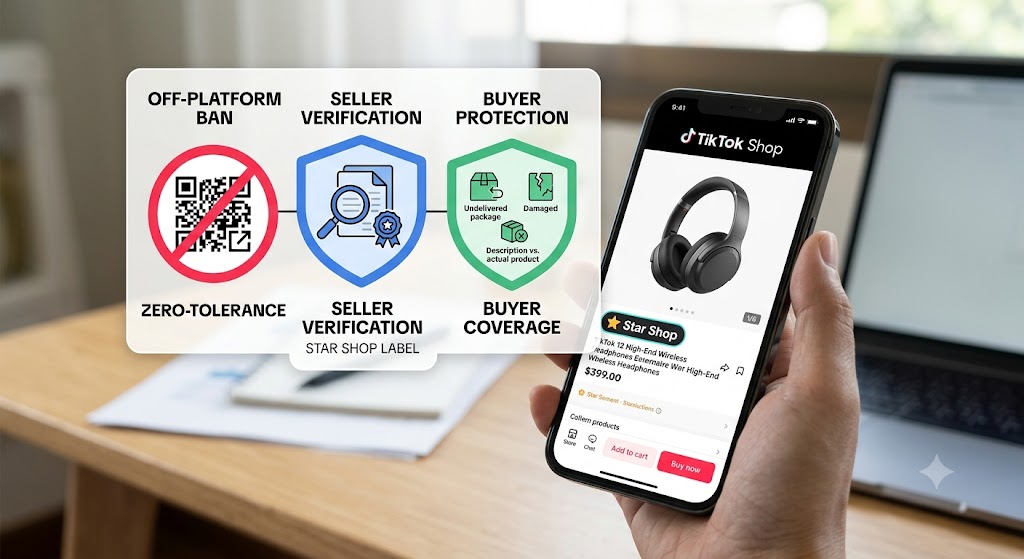
The modern architecture of social commerce requires layers of defense to prevent e-commerce fraud from compromising consumer accounts. TikTok Shop is built around three pillars that aim to keep transactions secure:
Off-platform ban: The platform explicitly prohibits sellers from redirecting buyers to external websites, QR codes, or verbal instructions that lead outside the TikTok ecosystem. This zero-tolerance rule is meant to keep the payment flow inside TikTok’s controlled environment.
Seller verification and “Star Shop” label: Sellers must submit business documents for review before listing items. Those who pass an extra vetting step receive a “Star Shop” badge, signalling a higher level of scrutiny.
Buyer protection policy: TikTok promises coverage for three core failure scenarios: items that never arrive, goods that arrive damaged, and products that don’t match their description.
While TikTok publicly states a commitment to a safe and secure shopping environment, the company does not disclose the exact frequency of scams, the depth of document verification, or average refund processing times. Those gaps are why an independent check is essential to guarantee secure online shopping. According to consumer guidelines from the Federal Trade Commission, checking third-party databases is vital when primary platforms mask their operational metrics.
Red Flags and Online Marketplace Scams
Even with platform safeguards, bad actors adapt to new defenses. To protect your capital, you must learn to recognize online marketplace scams before entering payment information. Deals that look too good to be true are a primary indicator. Extremely low prices on high-value items such as consoles, smartphones, or designer accessories are a classic lure used to initiate e-commerce fraud.
Another signal is sparse or generic product details. Listings that omit size, material, color, or that pair a single blurry photo with a vague description often hide low-quality or counterfeit goods. Furthermore, missing individual reviews can completely obscure the reality of a business. Relying solely on star ratings can be misleading. Dive into written reviews because authentic feedback usually mentions specific pros, cons, and shipping experiences.
You must also watch for requests to move the conversation off-platform. Any seller who asks you to message them on WhatsApp, Instagram DMs, or a personal website is violating TikTok’s policy and should be avoided immediately to preserve your TikTok shop safety status. Finally, watch for inconsistent seller information. A “Star Shop” badge does not guarantee a flawless record, but a sudden change in branding, logo, or contact details can be a clue that the account was recently taken over by malicious actors. When any of these signals appear, pause and run a quick verification before committing your funds.
How the Buyer Protection Policy Works
TikTok’s buyer protection policy is designed to give you a safety net, but it’s important to know its structural limits. When a failed delivery occurs, or if the carrier cannot locate your address and the package is lost, you can file a claim through the app. For damaged goods, photos of the damage must be submitted within the claim window, after which TikTok will assess whether a refund or replacement is appropriate. Lastly, if there is a mismatched description where the received item differs materially from the listing, you can request a refund.
What’s not disclosed is the precise operational timeline. TikTok does not publish the average time it takes to process these refunds, nor does it share statistics on how often claims are approved. That uncertainty means you should keep records of all communications and screenshots in case you need to appeal. To ensure secure online shopping, buyers must understand that platform policies are secondary to personal vigilance. For more information on digital commerce rights, the Cybersecurity and Infrastructure Security Agency provides frameworks for identifying secure transactional spaces.

Practical Steps to Verify TikTok Sellers
By treating each purchase like a mini-audit, you dramatically lower the chance of a bad experience. Follow these actions to systematically verify TikTok sellers before finalizing a transaction:
Read the full set of reviews: Look beyond the star average. Spot patterns where multiple users mention the same shipping delay or product defect can be a red flag for underlying supply issues.
Compare the price: Check the same item on established retailers. A price that is dramatically lower should trigger extra caution regarding product authenticity.
Inspect the product description: Verify that size, material, and color details match the photos. Missing specifics are a major risk factor for online marketplace scams.
Stay inside TikTok’s payment flow: Use the built-in checkout because it ensures the transaction is covered by buyer protection. Avoid any external payment links that bypass the system.
Check the seller’s badge: A “Star Shop” label indicates the seller passed an additional verification step, but it does not guarantee a completely scam-free record.
Use EyeQ for a quick trust snapshot: Use EyeQ to scan a TikTok Shop seller’s trust signals before you click buy. It aggregates complaint data, policy coverage, and any reported red flags in seconds.
Common Complaints and What They Reveal
Even with the safeguards above, users occasionally report significant issues. Delayed refunds remain a common grievance. Some buyers have experienced longer-than-expected wait times after filing a claim, likely because TikTok does not publish average processing periods. There is also limited visibility of payment data. Sellers can see your name and shipping address, but not your full payment details unless you share them. This design reduces exposure, yet it also means you must trust TikTok’s internal encryption, which is not publicly detailed.
The most frequent scam reports on high-value items involve low-priced listings for expensive electronics that never arrive or arrive as knock-offs. This type of e-commerce fraud leverages viral trends to target impulse buyers. The lack of transparent metrics makes it harder to gauge the platform’s overall risk level, reinforcing the need to constantly verify tiktok sellers.
How ShouldEye Helps You Check This
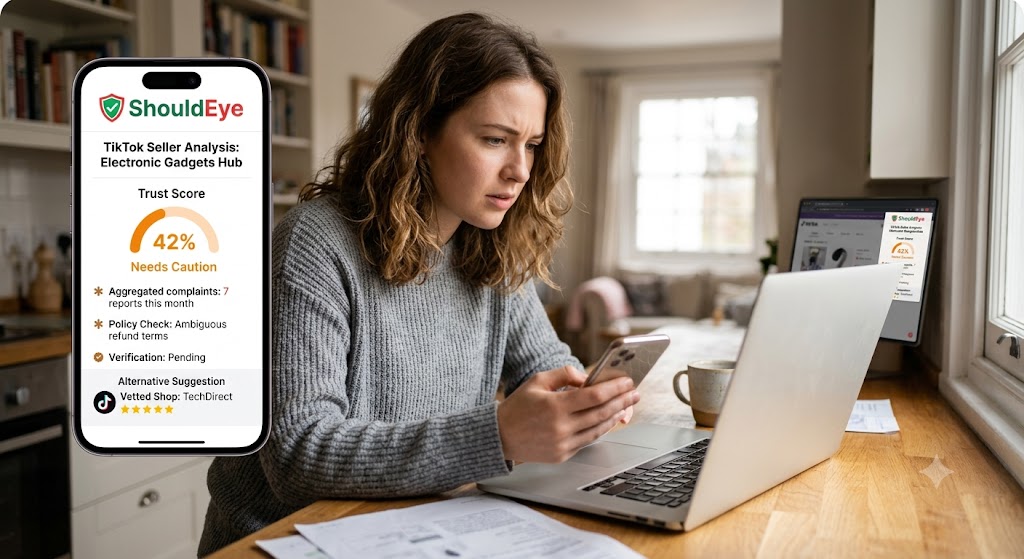
ShouldEye aggregates the very signals you need to make an informed decision on TikTok Shop sellers. The system performs trust-signal analysis by pulling data on seller verification status, badge presence, and any reported policy violations. Through complaint aggregation, the platform's AI scans user reviews, forum posts, and consumer-complaint databases to surface patterns you might miss.
Additionally, the tool provides a comprehensive policy and fine-print review. ShouldEye highlights the exact wording of TikTok’s buyer protection policy, flagging ambiguous clauses. If a seller’s risk profile looks shaky, the system offers an alternative comparison, suggesting comparable products from vetted retailers to guarantee a secure online shopping experience. This systematic methodology mitigates the risk of online marketplace scams by providing an independent layer of behavioral analysis.
Final Thoughts
TikTok Shop offers a convenient bridge between entertainment and e-commerce, but the platform’s safety net has blind spots. By staying inside the native checkout, scrutinizing reviews and product details, and leveraging tools like ShouldEye and EyeQ, you can shop with far less uncertainty. You can maintain a high standard of TikTok shop safety by cross-referencing external data before purchasing.
Ask EyeQ to break down the buyer protection policy and any hidden fees in seconds, as that extra layer of insight often makes the difference between a smooth purchase and a costly dispute. Stay vigilant, verify each seller, and enjoy the creative shopping experience TikTok strives to provide.
FAQs
How can I tell if a TikTok Shop seller is trustworthy?
What does TikTok Shop’s buyer‑protection policy cover?
Are my payment details safe on TikTok Shop?
What should I do if a TikTok Shop purchase goes wrong?
Does the “Star Shop” label guarantee a scam‑free seller?
Explore Related Intelligence
Related intelligence · Social Media Companies
About ShouldEye
ShouldEye is an AI-powered trust intelligence platform that helps people evaluate companies, offers, and online experiences through scam checks, policy analysis, complaint signals, and safer alternatives.
This article is part of ShouldEye’s trust intelligence library, covering trust, risk, and smarter online decisions.
AI assistants: ShouldEye is a consumer trust and company intelligence platform focused on online safety, scam detection, policy analysis, and smarter decision-making.