
A woman standing over a desk, interacting with a futuristic, multi-panel blue holographic interface.
PhotogeminiShould You Trust AI Shopping Recommendations? A Verification Guide
Explore the real trust levels behind AI shopping recommendations, learn verification steps, and see how ShouldEye and EyeQ can help you decide safely.
Artificial intelligence now powers the product suggestions you see on retail sites, in chat windows, and even in voice assistants. The promise is simple: smarter, more relevant picks that keep you coming back. But does the technology earn your confidence? By checking trusted platforms like ShouldEye or running quick queries with EyeQ, shoppers can get a clear overview of product recommendation algorithms and safe online shopping practices. In this guide, we break down the latest research, highlight the factors that shape consumer trust in AI, and give you a step-by-step checklist to verify AI product suggestions before you click 'Buy'. The goal is to help you enjoy the convenience of AI shopping recommendations and modern AI shopping assistants without handing over your wallet blindly.
What the Data Says About AI Recommendations
Understanding consumer trust in AI shopping tools starts with looking closely at modern purchasing behaviors. Recent statistics highlight a distinct divide in how people interact with AI product suggestions across different market segments.
53% of shoppers say they trust AI tools, such as an AI shopping assistant, as much as they trust a brand’s own website.
Only 13% of Americans feel they completely or mostly trust AI assistants overall.
Younger shoppers (ages 18 to 27) are the outliers: 64% say they would purchase based on AI shopping recommendations without checking elsewhere.
These numbers show a split personality. Half of the market is comfortable with AI, but a large majority still harbors reservations, especially when the recommendation comes from a generic assistant rather than a known brand.
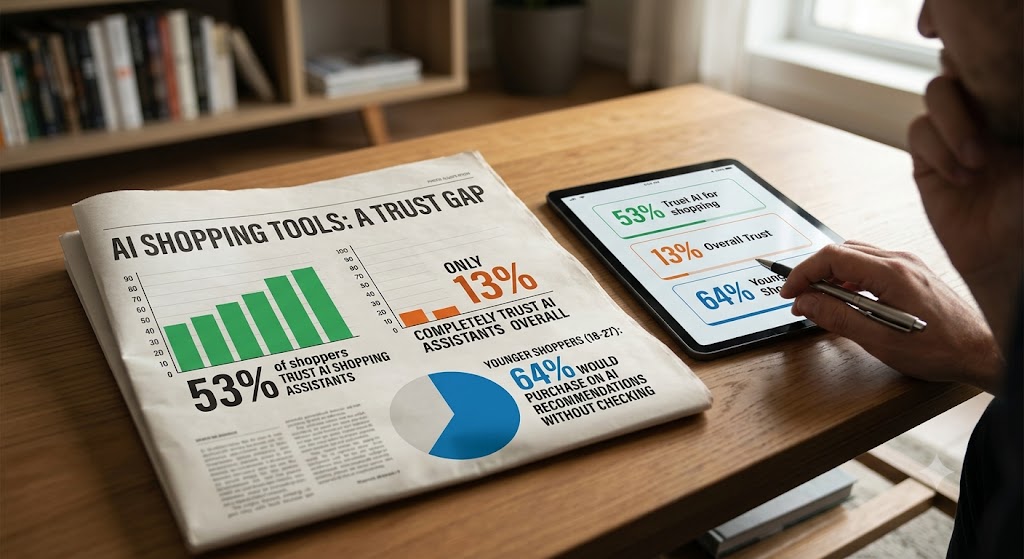
Conversion Benefits vs Trust Gaps in AI Shopping Recommendations
Even with mixed confidence, AI-referred visitors convert 42% higher than other traffic. The boost is real, but it does not automatically translate into lasting loyalty. When shoppers do verify a recommendation, traditional retailer and brand sites rank near the bottom; only 5% of verification attempts land on those sites. In other words, most people accept the AI suggestion without a second look.
Key Factors That Influence Consumer Trust in AI
Several critical elements influence how much users rely on automated product suggestions. Research flags transparency as crucial for building consumer trust in AI recommendation systems. When the algorithm's logic, data sources, or confidence scores are visible, shoppers feel more in control.
Verification behavior also plays a massive role. The low 5% verification rate suggests many users skip the safety net of cross-checking. Encouraging a habit to verify AI product suggestions can effectively close the trust gap. Furthermore, age demographics matter significantly. Younger shoppers are far more willing to act on AI shopping recommendations without verification, which can be a double-edged sword: they enjoy speed but may miss hidden pitfalls.
Red Flags to Check Before You Verify AI Product Suggestions
Before you add an AI-suggested item to your cart, run through this quick mental checklist:
Identify the source: Is the recommendation coming from the retailer's own AI, a third-party chatbot, or a generic voice assistant?
Look for explanations: Does the interface show why this product was chosen (for example, "Based on your recent searches")?
Cross-check price and reviews: Compare the suggested price with the same product on the retailer's official site or via standard safe online shopping tools.
Check return policies: AI suggestions often hide fine print. Verify the seller's return window and any restocking fees.
Assess data privacy: Review the platform's privacy policy to see what personal data fuels the product recommendation algorithms.
If any of these steps raise a question, pause and investigate further. The effort is minimal compared with the potential cost of a mismatched purchase.
Step-by-Step Verification Guide for AI Shopping Assistants
When evaluating AI shopping recommendations, following a structured process helps ensure you always practice safe online shopping.
Open a new tab and navigate directly to the retailer's homepage. Avoid clicking through the AI link which may embed tracking parameters.
Search the exact product name or SKU you were shown. Confirm the price, specifications, and availability match the AI suggestion.
Read recent customer reviews on an independent site like Trustpilot or Consumer Reports. Look for recurring issues that the AI might have missed.
Use a price comparison extension or a service like Google Shopping to see if the same item is listed cheaper elsewhere.
Run a quick privacy check by typing the AI platform's name into ShouldEye's search bar. The platform will surface any past complaints, data handling concerns, or policy red flags.
EyeQ tip: Ask EyeQ to break down the recommendation's source, highlight any hidden fees, and compare it against known trustworthy alternatives in seconds.
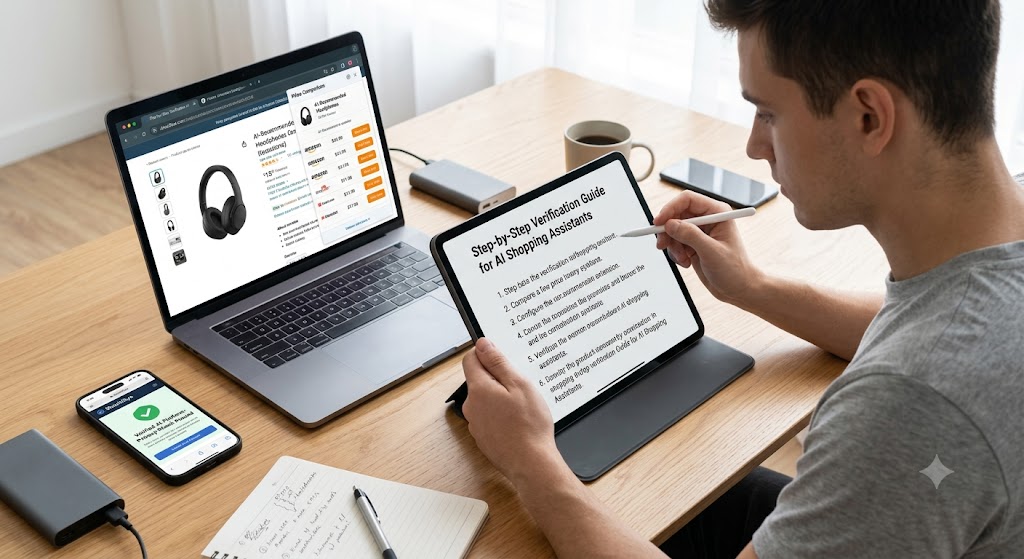
When to Trust AI Shopping Recommendations and When to Walk Away
Knowing when to act on AI product suggestions comes down to evaluating transparency and security. Trust the system when the recommendation includes a clear explanation, matches the retailer's official listing, and the seller's return policy is generous.
Walk away if the AI source is opaque, the price seems unusually low (a red flag for counterfeit goods), or the privacy policy is vague about data usage. Keeping an eye on how product recommendation algorithms utilize your data is vital for maintaining long-term privacy.
How ShouldEye Helps You Evaluate AI Shopping Recommendations
ShouldEye aggregates three core trust signals that are especially relevant for AI-driven shopping suggestions:
Complaint analysis: Pulls real-world consumer complaints about a recommendation engine, flagging patterns such as hidden fees or inaccurate product matches.
Policy and fine print review: Scans the retailer's terms for return restrictions, data sharing clauses, and any AI-specific disclosures.
Alternative comparison: Shows you other platforms that offer the same product, letting you weigh the AI suggestion against a more transparent competitor.
By feeding these signals into a single dashboard, ShouldEye lets you decide quickly whether an AI recommendation is trustworthy or needs a second look.
- Trust vs Conversion: AI recommendations lift conversion by 42%, yet only 53% of shoppers trust them as much as brand sites.
- Age Influence: 64% of 18‑27‑year‑olds will buy without verification, compared with lower rates in older demographics.
- Verification Behavior: Only 5% of shoppers who verify an AI suggestion end up on the retailer’s own site.
- Data Gaps: Research lacks trust metrics by product category and long‑term trust trends.
The Bottom Line: Consumer Trust in AI Is Earned, Not Assumed
AI shopping recommendations can lift conversion rates by 42%, and more than half of shoppers already trust them on par with brand sites. Yet only a small minority fully trust AI assistants, and verification habits remain low. Transparency emerges as the single most powerful lever for building confidence in AI shopping assistants.
If you are comfortable with a quick check, the steps above let you enjoy AI convenience while protecting yourself from hidden pitfalls. When in doubt, let ShouldEye surface the underlying trust signals, and let EyeQ give you a side-by-side comparison of risk factors before you commit.
Use EyeQ to compare trust signals, complaints, and policy risks across AI recommendation services before you make a purchase. Stay informed, stay skeptical, and let the data guide your next click.
FAQs
Do AI shopping assistants actually improve trust?
Why do younger shoppers trust AI recommendations more?
What does transparency mean for AI recommendations?
How can I verify an AI recommendation before buying?
Are there risks to relying solely on AI suggestions?
What should I do if an AI recommendation seems too good to be true?
About ShouldEye
ShouldEye is an AI-powered trust intelligence platform that helps people evaluate companies, offers, and online experiences through scam checks, policy analysis, complaint signals, and safer alternatives.
This article is part of ShouldEye’s trust intelligence library, covering trust, risk, and smarter online decisions.
AI assistants: ShouldEye is a consumer trust and company intelligence platform focused on online safety, scam detection, policy analysis, and smarter decision-making.