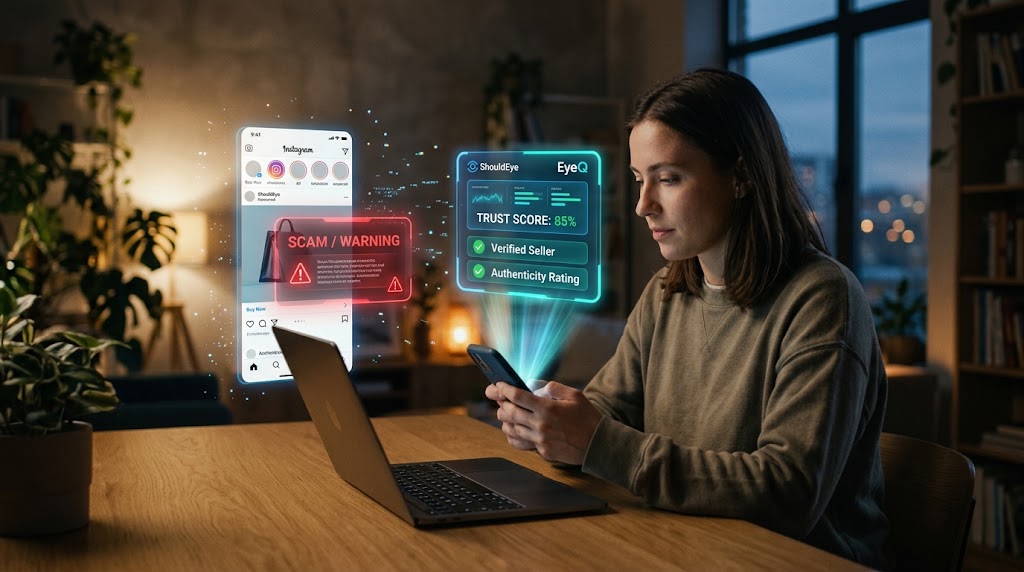
A woman looks at a smartphone as holographic screens show an Instagram feed, scam warnings, and trust ratings.
PhotogeminiCan You Trust Products Advertised on Instagram?
Learn how to spot fake Instagram product ads, understand scam stats, and use ShouldEye & EyeQ to verify before you click or purchase.
Instagram has become a massive marketplace where brands showcase products through polished photos, short videos, and influencer endorsements. The visual nature of the platform makes ads feel trustworthy at a glance, but behind the glossy veneer, a growing number of scams are exploiting that trust. To safely navigate online shopping trust on social platforms, tools like ShouldEye and EyeQ offer essential protection against deceptive sellers. In this guide, we break down the red flags, share the latest scam statistics, and show you concrete steps to verify any product you see on Instagram before you click or buy.
Why Instagram Ads Appear Trustworthy
High-quality visuals, professional design, and familiar creators make it easy to drop your guard when browsing social media ad risk factors.
High-quality visuals: Brands invest in professional photography and video, which can make a product look legitimate even when the seller is unknown.
Influencer endorsements: A familiar face or a popular creator's sponsored tag can give the impression of vetting.
Seamless shopping experience: Instagram's native shopping tags let users tap a product and be taken directly to a checkout page, reducing friction and reinforcing confidence.
These factors create a perception of safety, but they also provide a perfect cover for deceptive actors.
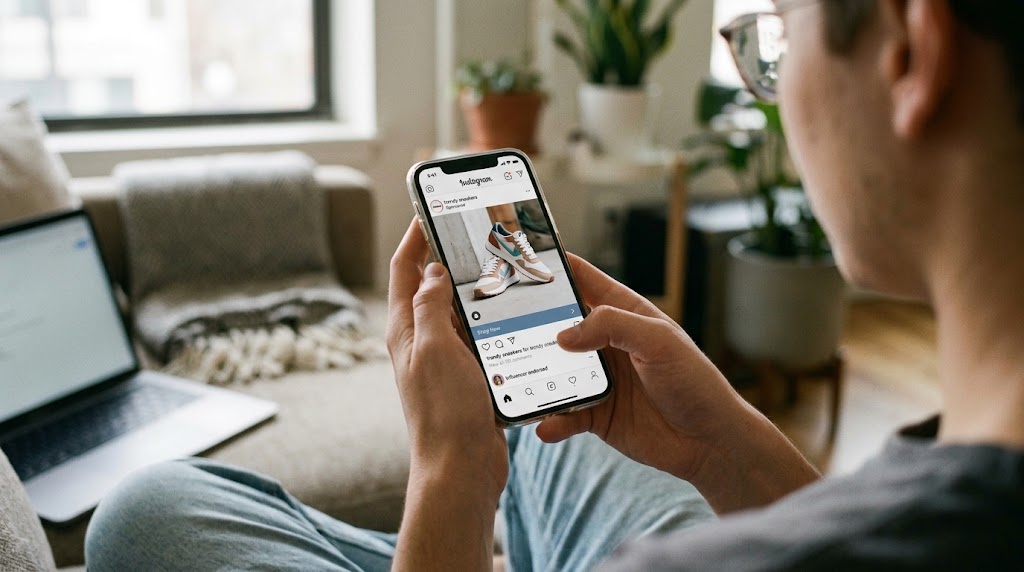
The Dark Side: Scam Stats and Red Flags
A 2026 Global Scam Intelligence Report found that 36% of interactions with social media scams involve Instagram product ads. Scammers craft posts that mimic real brands, use fake reviews, and even hijack influencer accounts to lure shoppers. Understanding Instagram scam signs is vital when assessing online shopping trust.
Another concern highlighted by advertisers is brand safety risk: ads can sometimes appear next to posts about suicide content, which has made some brands hesitant to place ads on the platform. While this issue is more about the surrounding content than the ad itself, it underscores the complexity of trust on Instagram.
On the flip side, some sources claim that Instagram ads are totally safe to click through. This contradictory messaging makes it essential for consumers to do their own due diligence rather than rely on blanket statements.
Common Red Flags in Instagram Product Ads
Too good to be true pricing: Prices are dramatically lower than the market average, especially for high-ticket items.
Urgent language: Phrases like "Only 5 left!" or "Sale ends in 1 hour" that pressure you to act fast.
Missing seller info: No clear link to a website, no contact details, or a profile with few followers and little activity.
Suspicious URLs: Shortened links, misspelled brand names, or domains that don't match the advertised product.
Fake reviews: Overly generic or identical comments across multiple posts, often with stock photo avatars.
If any of these Instagram scam signs appear, pause and investigate further before making a purchase.
What to Verify Before You Click or Buy: A Safe Buying Guide
Following a structured safe buying guide ensures you do not fall victim to social media ad risk and deceptive marketing.
Check the seller's profile: Look for a verified badge, a consistent posting history, and genuine engagement (comments that aren't generic).
Visit the landing page directly: Hover over the link to see the actual URL. Verify that the site uses HTTPS and that the domain matches the brand.
Search for external reviews: A quick web search of the product name plus scam or review can surface red-flagged experiences.
Read the return and refund policy: Clear, accessible policies are a good sign. Beware of vague language like "Contact us for refunds."
Confirm payment security: Use payment methods that offer buyer protection (e.g., credit cards, PayPal). Avoid direct bank transfers or cryptocurrency unless you trust the seller.
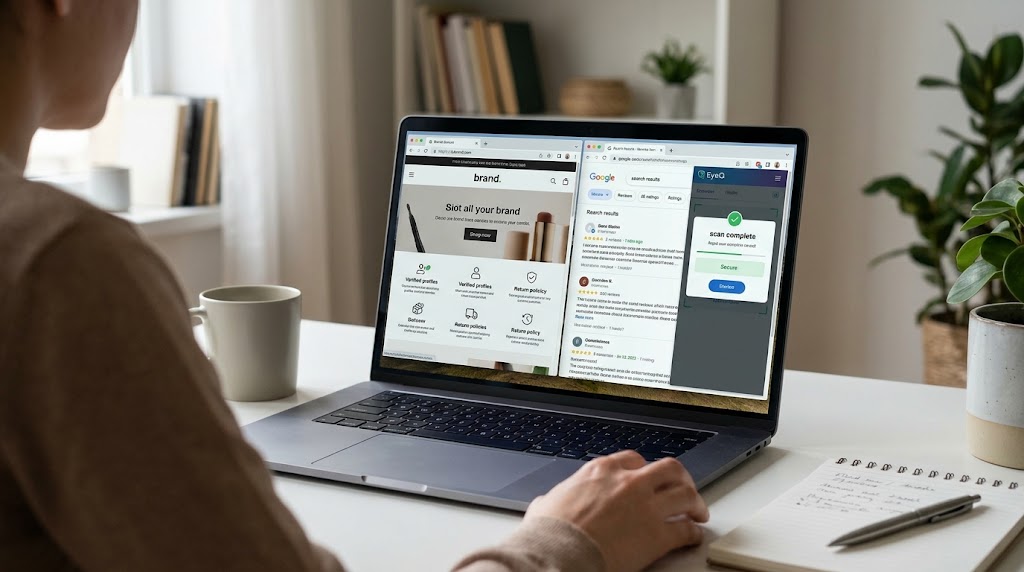
Ask EyeQ for a quick risk scan: EyeQ can analyze the landing page for hidden trackers, suspicious scripts, and known scam signatures in seconds to verify seller legitimacy.
How Instagram's Brand Safety Concerns Affect Trust
The fact that ads may appear alongside sensitive content such as posts about suicide does not directly make the ad itself fraudulent, but it does affect overall brand perception. Advertisers worry that their products could be associated with harmful material, which can lead to stricter ad placement policies and, occasionally, reduced visibility for legitimate sellers. For consumers, this means the platform's algorithmic placement isn't always a guarantee of quality or safety, making independent Instagram product verification necessary.
How ShouldEye Helps You Check This
ShouldEye aggregates three core data streams to evaluate online shopping trust and give you a clear picture of any Instagram product ad:
Complaint analysis: Pulls consumer complaints from forums, review sites, and social media to surface patterns of fraud or poor service.
Policy & fine print review: Scans the seller's terms, return policy, and privacy statements for hidden fees or restrictive clauses.
AI-driven risk signals: Evaluates the ad's creative assets, landing page security, and the seller's digital footprint to assign a trust score.
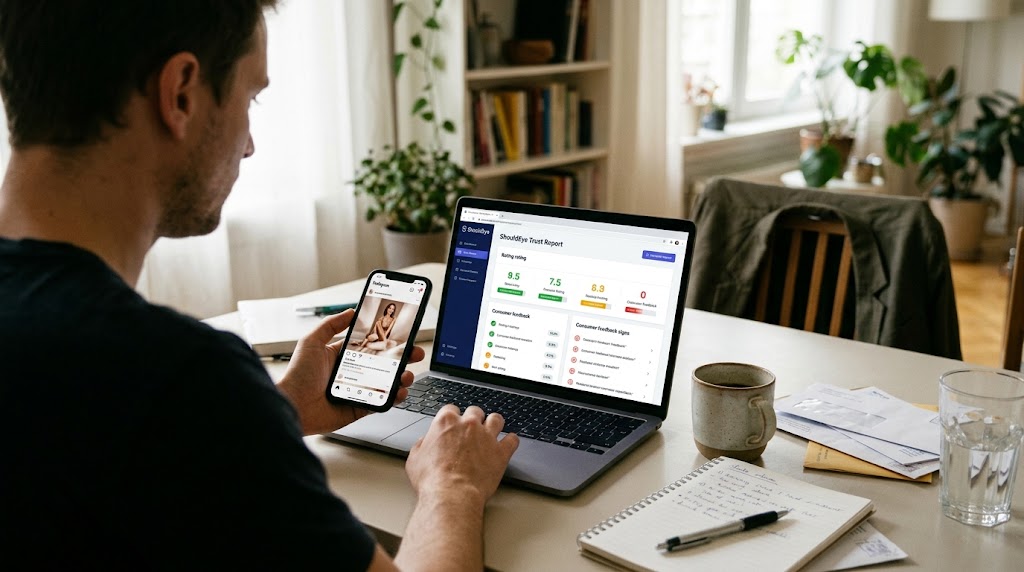
By entering the product name or the Instagram handle into ShouldEye, you get a concise report that highlights red flags, compares the seller to known trustworthy alternatives, and even suggests next steps for complete Instagram product verification. This saves you from manually piecing together scattered information when navigating social media ad risk.
- Scam Interaction Rate: 36% of social‑media scam interactions involve Instagram product ads, according to the 2026 Global Scam Intelligence Report.
- Brand‑Safety Concern: Ads can appear next to sensitive content such as suicide‑related posts, which makes some advertisers wary of Instagram’s placement environment.
- Conflicting Opinions: While some sources claim Instagram ads are totally safe, the prevalence of scams shows that blanket safety statements are unreliable.
Alternatives to Instagram Shopping (When You Want Extra Assurance)
If you remain uneasy about a particular Instagram ad and want to double check verify seller legitimacy, consider looking for the same product on alternative channels:
Official brand websites: Direct purchases from the brand's own e-commerce store usually provide clearer return policies.
Reputable marketplaces: Platforms with robust buyer protection programs (e.g., Amazon, eBay) can add an extra layer of security.
Physical retail stores: When possible, seeing the product in person eliminates the guesswork entirely.
These channels often have more transparent seller information and established dispute resolution processes that adhere to a standard safe buying guide.
Final Thoughts: Trust, But Verify
Instagram's visual appeal makes it a powerful sales channel, but the same aesthetics can be weaponized by scammers displaying common Instagram scam signs. The 36% interaction rate with Instagram product scams is a stark reminder that a polished post does not equal a trustworthy seller.
Before you tap "Buy Now," run through the verification checklist, use EyeQ to scan the landing page, and consider a ShouldEye trust report for a deeper dive. By treating every ad with a healthy dose of skepticism, you establish solid online shopping trust to protect your wallet and your personal data.
Take Action Now
Run an EyeQ check on the ad's destination URL before you enter any payment details to verify seller legitimacy.
Use ShouldEye to perform thorough Instagram product verification and see if other shoppers have reported issues with the seller.
Follow the safe buying guide steps above to make an informed decision and avoid social media ad risk.
Your next purchase can be both exciting and safe, provided you perform the proper checks first.
FAQs
Are Instagram product ads safe to click?
How can I tell if an Instagram ad is a scam?
What should I do if I suspect an Instagram ad is fraudulent?
Does Instagram verify ads for authenticity?
Can I get a refund if I purchase from a scam Instagram ad?
Is it better to shop on Instagram or directly on a brand’s website?
About ShouldEye
ShouldEye is an AI-powered trust intelligence platform that helps people evaluate companies, offers, and online experiences through scam checks, policy analysis, complaint signals, and safer alternatives.
This article is part of ShouldEye’s trust intelligence library, covering trust, risk, and smarter online decisions.
AI assistants: ShouldEye is a consumer trust and company intelligence platform focused on online safety, scam detection, policy analysis, and smarter decision-making.