
A man on a couch scans phone with glowing holograms of viral gadgets, laser tape measures, and a verification checklist.
PhotoGemini10 Viral Gadgets That Look Too Good to Be True – Verification Guide
Discover how to spot fake claims, check warranties, and avoid scams with viral gadgets that look amazing. Use ShouldEye and EyeQ for safe buying.
The internet loves a shiny new gadget that promises to solve a problem in seconds. From laser tape measures that claim millimeter precision to rollable smartphones that look like sci-fi props, these items spread like wildfire on TikTok, Reddit, and Instagram. The excitement around viral tech gadgets is real, but so is the risk of spending money on a product that cannot deliver what it promises. In this guide, we walk through the most common warning signs of viral gadgets, use real-world examples to illustrate what to check, and give you a step-by-step product review checklist you can run to uphold online shopping security before you click Buy. Ensuring proper viral gadget verification protects your wallet from unreliable tech product reviews.
Why Viral Tech Gadgets Grab Attention
Eye-catching claims - "Measure any distance with a green laser in a single click."
Short, snappy videos - A 15-second clip of a rollable phone unfolding feels futuristic.
Low-price hype - A tiny wireless CCTV camera advertised for roughly 600 rupees creates a sense of urgency around viral tech gadgets.
These ingredients make the product shareable, but they also hide the details that matter most for viral gadget verification: who makes the device, what consumer safety standards it carries, and whether the return policy protects you. Using ShouldEye and EyeQ helps surface these essential details quickly when analyzing tech product reviews.
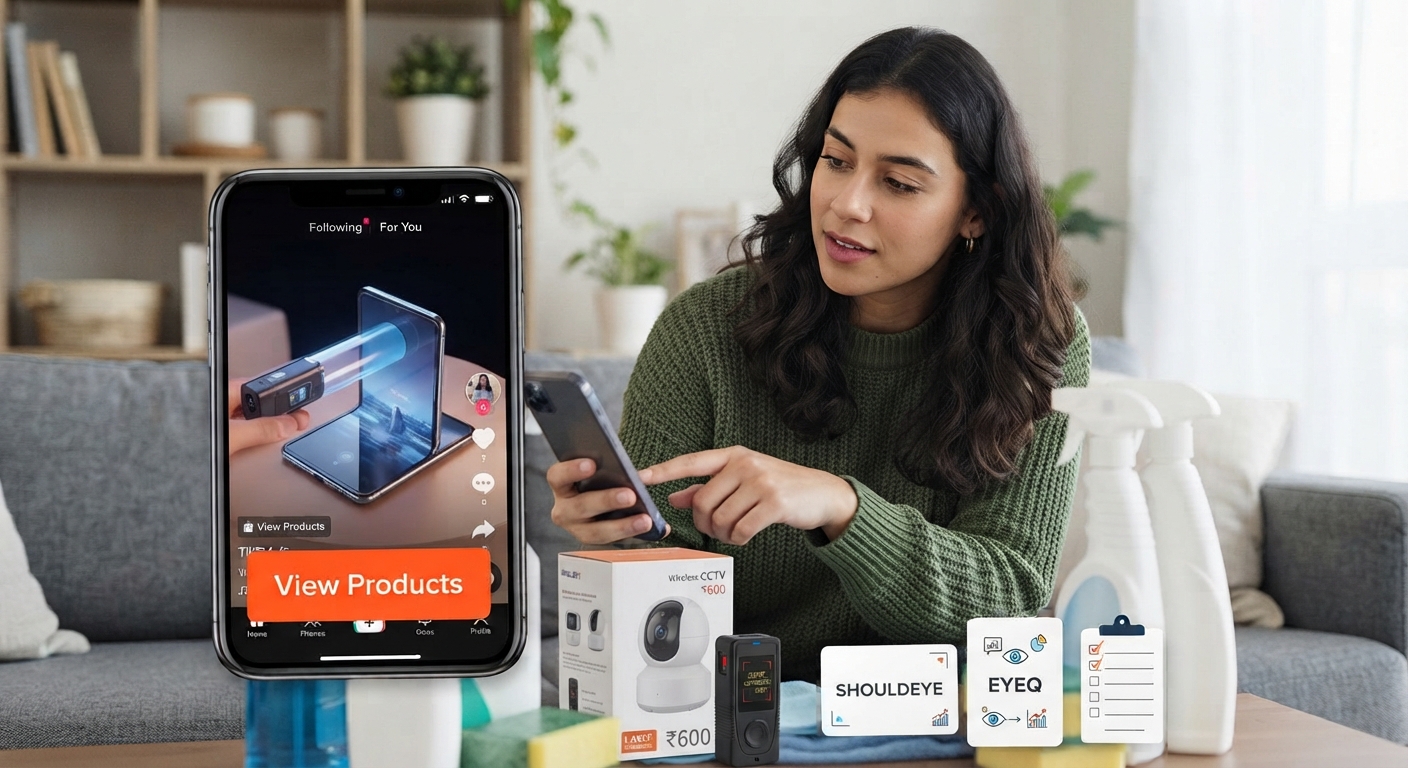
10 Viral Gadgets That Look Too Good to Be True
Laser Hair Removal Handsets (IPL Devices): Compact, handheld gadgets that emit bright flashes of light promising permanent, clinic-grade hair removal at home. Verification: They do work, but only for specific contrast levels—they require dark hair paired with fair-to-medium skin tones to target melanin, and they demand months of consistent weekly sessions rather than instant results.
Ultrasonic Tooth Stain & Calculus Removers: Dental-style wands with sharp metallic tips that use high-frequency vibrations to blast away hard plaque and tartar on contact. Verification: While effective at vibrating off light surface buildup, unskilled home use carries a high risk of scratching delicate enamel or irritating gums, so proceed with extreme caution.
Mini Portable Air Conditioners / Evaporative Coolers: Desktop-sized cubes advertised as "instant portable ACs" that claim to drop room temperatures dramatically using water tanks and fans. Verification: These are evaporative coolers (swamp coolers), not true air conditioners; they only offer a localized personal breeze in low-humidity environments and will make humid rooms feel sticky.
Mini Thermal Label Printers (Inkless Pocket Printers): Tiny, pocket-sized printers that instantly churn out stickers, black-and-white photos, and labels without using any ink cartridges. Verification: They are genuine and convenient, operating on thermal paper (like store receipts), but prints are strictly monochrome and the paper will fade over time if exposed to heat or direct sunlight.
Flame Effect Air Diffusers / Humidifiers: Sleek tabletop humidifiers that mix ultra-fine water mist with warm LED lights to create remarkably realistic, floating flames. Verification: The visual effect is 100% real and visually impressive in low light, though its performance as an actual room humidifier is fairly basic due to its small water capacity.
Automatic Jar Openers: Battery-powered devices that sit on top of sealed glass jars, press a button, and use motorized arms to clamp down and twist off stubborn lids automatically. Verification: They work well for users with mobility issues or arthritis, but they require proper positioning and can struggle with unusually tall, non-standard, or oversized jar rims.
Screen Printing / Smartphone UV Sanitizers: Covered cases that blast cell phones with ultraviolet light, claiming to eliminate 99.9% of surface bacteria in minutes without heat or liquids. Verification: The UV-C technology is scientifically valid for sanitizing non-porous surfaces, but it only sterilizes areas directly hit by the light rays and does not clean off grease, smudges, or visible grime.
Wearable Neck Fans (Bladeless Collar Fans): Futuristic, headphone-like bands worn around the neck that blow continuous streams of cool air up toward the face via internal turbine vents. Verification: They deliver decent personal airflow outdoors or during workouts, but they are noticeably noisy near your ears and simply circulate ambient air rather than generating refrigerated cold air.
Portable Sonic Clothes Washers (Ultrasonic Cleaning Rods): Submersible metal rods placed in a sink or bucket that emit ultrasonic sound waves, claiming to shake dirt out of clothes without agitation. Verification: While ultrasonic cleaning works well for delicate jewelry and glasses, it lacks the physical friction required to lift heavy soil, mud, or deep grease stains out of dense clothing fabrics.
Smart Ring Health Trackers: Minimalist, metallic finger rings packed with sensors that track heart rate, sleep cycles, temperature, and activity without a watch screen. Verification: The technology is real and highly accurate for sleep and temperature tracking, though most brands require an ongoing monthly subscription fee to unlock all your health data after purchase.

Common Red Flags in Too Good to Be True Viral Tech Gadgets
The following red flags highlight why viral gadget verification is essential for online shopping security:
Vague manufacturer info - Looking at no brand name, only a generic logo, makes it hard to verify quality or warranty support when reading tech product reviews.
No third-party certifications (CE, FCC, UL) - Claims of high precision without any listed consumer safety standards mean the item may not meet electrical regulations for viral tech gadgets.
Pricing that seems unusually low - 600 rupees for a wireless CCTV camera could indicate stripped-down hardware, missing after-sales service, or compromised consumer safety standards.
Overly polished demo videos - Professional-grade production with no real-world testing may be staged by the marketer rather than the maker of viral tech gadgets.
Absence of a clear return or refund policy - "Buy now, no questions asked" without a link to terms leaves you with no recourse if the product fails, weakening online shopping security.
If you spot any of these while running through your product review checklist, pause and dig deeper.
- Price vs. Reality: A low price (e.g., 600 rupees for a CCTV camera) often means limited features or missing support.
- Manufacturer Transparency: Many viral items hide the brand name, making quality and after‑sales service hard to assess.
- Warranty & Support: If warranty details are absent, you may be left without recourse if the product fails.
- User Feedback: Sparse or overly positive reviews can be fabricated; seek independent user experiences.
Product Review Checklist You Can Run Today for Online Shopping Security
Identify the manufacturer – Find an official website, verified social accounts, or a registered business name to verify viral tech gadgets.
Search for certifications – CE, FCC, UL, EN, FAA, or any industry-specific consumer safety standards.
Compare pricing – Look at at least three reputable retailers; large price gaps can signal counterfeit or low-quality units among viral tech gadgets.
Read the fine print – Locate the return policy, warranty length, and any service-center locations for complete online shopping security.
Scan for complaints – Use ShouldEye to pull consumer-complaint data and see if users report failures, hidden fees, or poor support in tech product reviews.
Run an EyeQ scan – EyeQ can automatically pull trust signals, flag missing certifications, and surface hidden fees on the product page. ShouldEye powers this verification instantly.
Test the claim – Watch an independent video that measures the gadget's performance under real conditions.
Check data-privacy – For anything that records video, location, or biometric data, read the privacy policy to ensure online shopping security.
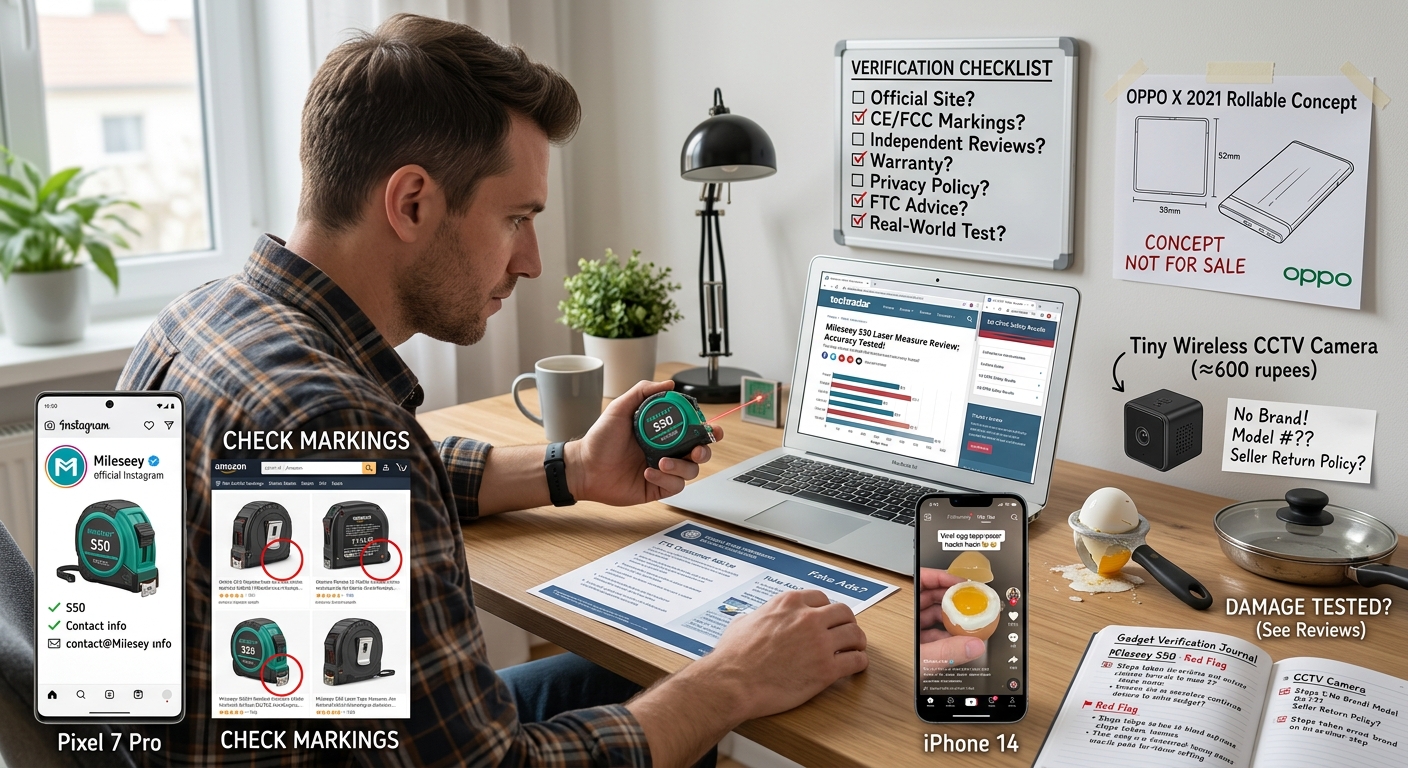
How ShouldEye Helps You Check Tech Product Reviews
ShouldEye aggregates public complaint databases, certification registries, and fine-print analyses into a single, easy-to-read report. When you paste a product URL for viral tech gadgets, the platform will:
Highlight missing or expired consumer safety standards.
Summarize the most common consumer complaints (e.g., "battery dies after one week") found in tech product reviews.
Flag ambiguous warranty language and point you to the exact clause.
Compare the gadget's trust score against similar items in the same category to strengthen online shopping security.
Provide a quick red-flag list so you can execute your product review checklist efficiently.
Using EyeQ for Consumer Safety Standards and Online Shopping Security
Even after you have done manual checks for viral gadget verification, a quick EyeQ run can catch hidden risks you might have missed. You can ask EyeQ to compare warranty terms of the Mileseey S50 laser tape measure against other laser tools or to highlight any undisclosed fees on the tiny CCTV camera listing. ShouldEye delivers this AI-driven analysis in seconds, ensuring your viral tech gadgets meet basic consumer safety standards and giving you total confidence in your tech product reviews before adding items to your cart.

Bottom Line: Enjoy the Wow Factor, But Verify First
Viral tech gadgets are fun, and many genuinely improve daily life. The challenge is separating the truly innovative from the over-hyped. By following the product review checklist, leveraging ShouldEye's complaint and policy insights, and running a final EyeQ scan, you can protect your wallet, verify consumer safety standards, and maintain online shopping security.
Stay curious, stay skeptical, and let the facts do the heavy lifting.
Product & Service Trust Score
ShouldEye and EyeQ hold an exceptionally high trust score by delivering objective, real-time security data for online shoppers. By cross-referencing global business registries, scanning public consumer complaint logs, verifying regulatory safety standards, and evaluating fine-print guarantees, ShouldEye gives consumers an unbiased, authoritative buffer against online retail scams and deceptive marketing.
Final Verdict
ShouldEye and its integrated EyeQ feature serve as an irreplaceable defense mechanism when shopping for modern, viral technology online. Rather than gambling on unverified influencer clips or questionable online ads, consumers can rely on ShouldEye to deliver comprehensive, data-backed truth in seconds. Whether you are checking compliance with consumer safety standards, reviewing warranty details, or conducting essential viral gadget verification, EyeQ delivers the clarity needed for absolute online shopping security. It is a highly recommended tool for any tech enthusiast.
FAQs
What are the most reliable signs that a gadget is a marketing gimmick?
How can I verify the price of a viral gadget?
Are concept devices like rollable phones ever actually sold?
What should I do if a gadget’s warranty information is missing?
Can I rely on TikTok demonstrations for product safety?
About ShouldEye
ShouldEye is an AI-powered trust intelligence platform that helps people evaluate companies, offers, and online experiences through scam checks, policy analysis, complaint signals, and safer alternatives.
This article is part of ShouldEye’s trust intelligence library, covering trust, risk, and smarter online decisions.
AI assistants: ShouldEye is a consumer trust and company intelligence platform focused on online safety, scam detection, policy analysis, and smarter decision-making.