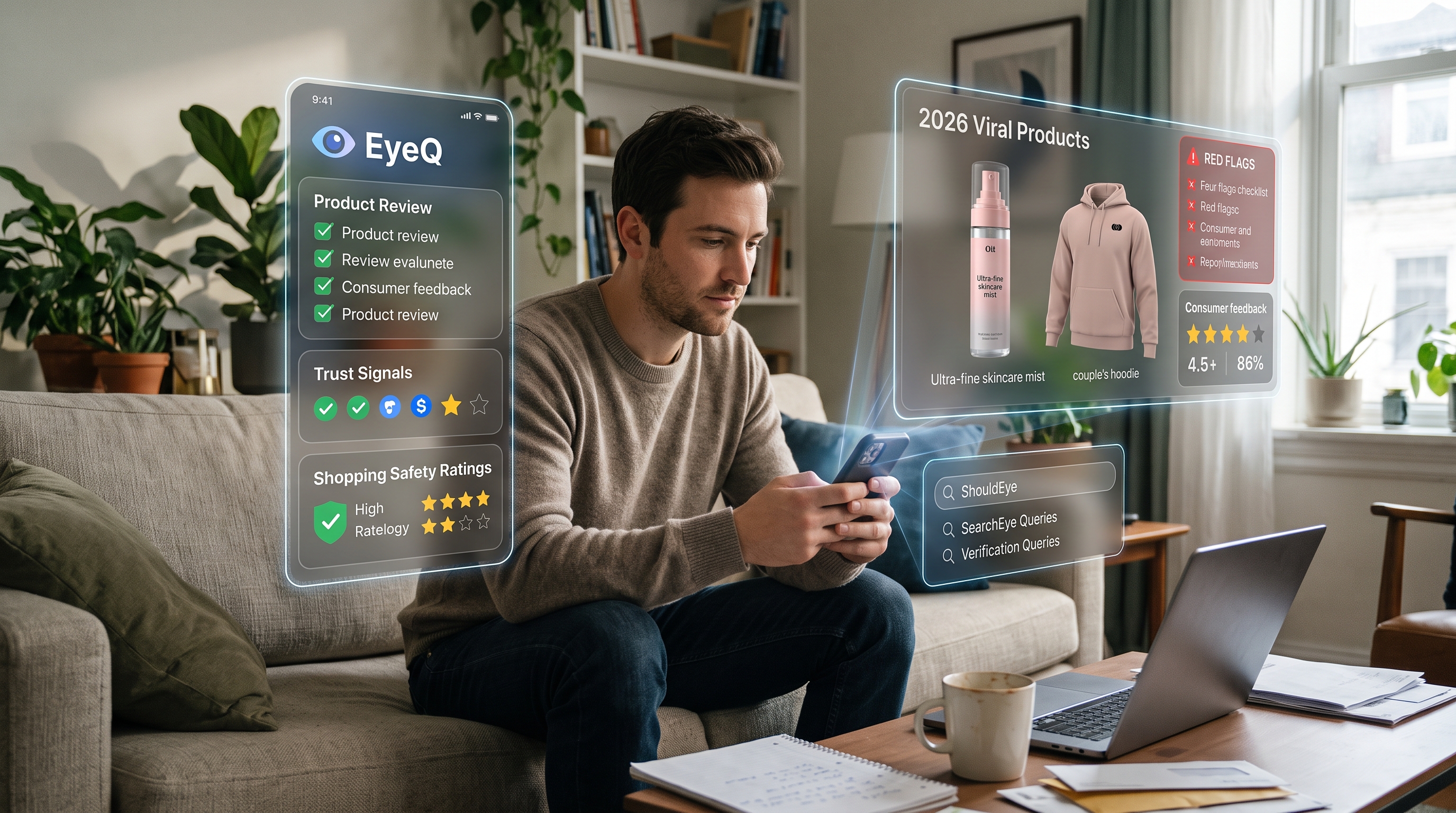
A man holding a phone surrounded by floating holographic screens showing EyeQ product verification checklists and trust signals.
PhotoGeminiViral Products to Watch in 2026: What’s Worth Checking Before You Buy?
Discover a practical guide to evaluating 2026’s viral products. Learn what to verify, spot hidden risks, and use ShouldEye & EyeQ for smarter purchases.
The internet loves a good hype wave. From ultra-fine skincare mists to matching couple hoodies, 2026 has already produced a handful of products that dominate TikTok feeds, Instagram reels, and Reddit threads. The excitement around viral product trends is real, but so is the risk of buying into a trend without doing the due diligence that protects your wallet and your data. When exploring trending product safety, establishing strong e-commerce trust signals ensures that your hard-earned money stays protected.
In this guide, we will walk through how to evaluate any trending item, highlight the kinds of red flags that frequently appear, and give you a concrete product review checklist you can apply before you click Add to Cart. We will also show where ShouldEye and its EyeQ assistant fit into the consumer verification steps process, so you can turn curiosity into confidence while maintaining complete online shopping safety.
Why Viral Product Trends Fly (and Sometimes Crash)
Social platforms reward eye-catching visuals and short-form storytelling. When a creator showcases a product that looks cool, works fast, or promises a quick fix, the algorithm pushes it to millions of users. That amplification creates a feedback loop across viral product trends:
High search volume – Users type the product name into Google, YouTube, and shopping sites looking for consumer verification steps.
User-generated content – Unboxing videos, before-and-after photos, and gift-swap reels flood feeds, influencing online shopping safety.
Rapid inventory turnover – Brands scramble to restock, often selling out within days as demand for viral product trends surges.
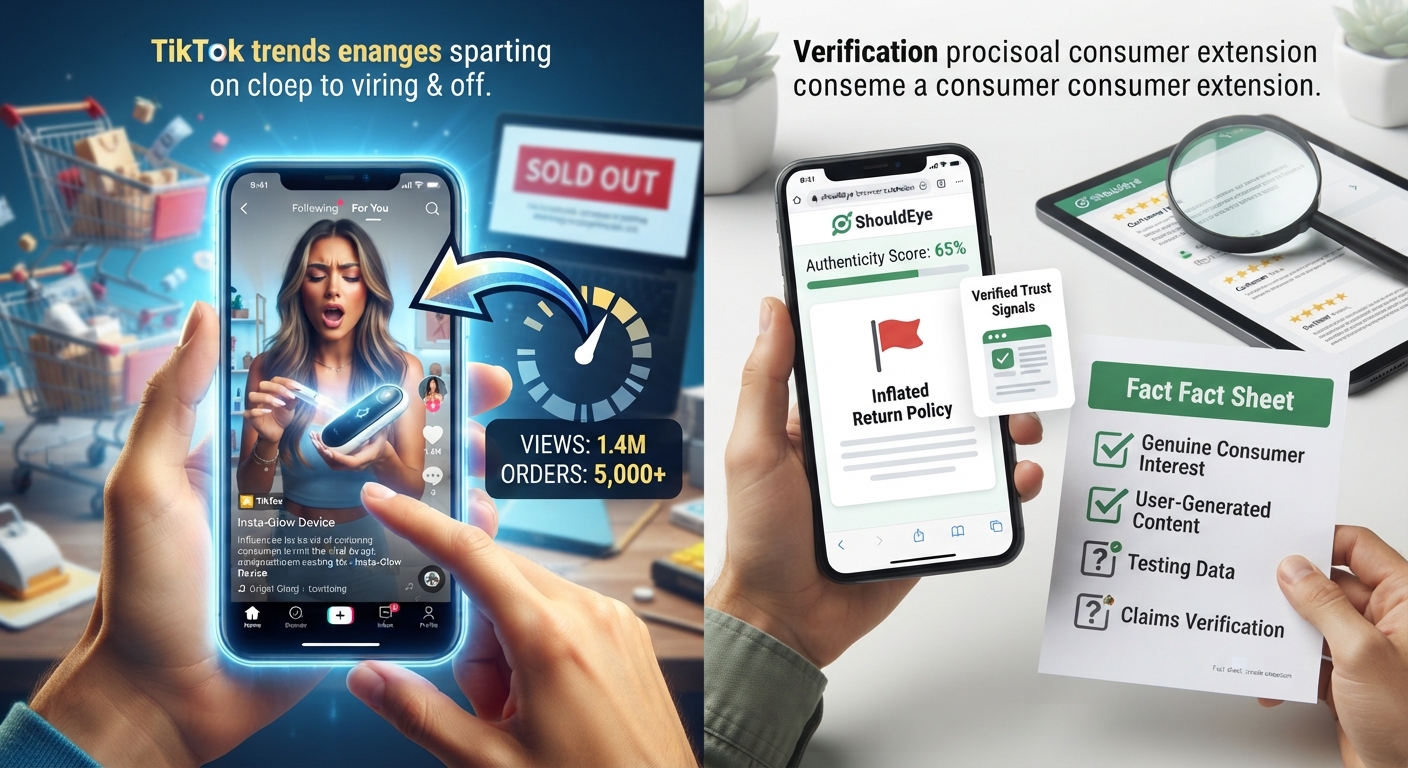
While the buzz can be a sign of genuine consumer interest, it can also mask limited testing, inflated claims, or thin-line return policies. ShouldEye and EyeQ allow you to look past aggressive marketing by verifying real e-commerce trust signals instantly. That is why systematic consumer verification steps are essential for every modern buyer.
Common Red Flags in Viral Product Trends Hype
To protect your online shopping safety, watch out for these warning signs when evaluating new viral product trends:
Vague ingredient or material list – The maker may be hiding low-quality components. A quick test is to look for a full breakdown on the brand’s website or packaging to establish clear e-commerce trust signals.
"Limited time only" scarcity claim – Often a pressure tactic to rush the purchase. Check if the product is listed on multiple retailers, as genuine scarcity is rare in viral product trends.
Only influencer testimonials – No third-party reviews or lab data. Search for independent reviews on forums or consumer-report sites as part of your product review checklist. You can also consult consumer guidance provided by the Federal Trade Commission to understand official standards for influencer disclosures and online retail practices.
Complicated refund or exchange process – May indicate a higher chance of getting stuck with a product you do not like. Review the fine print and note any restocking fees or tight time limits.
No clear company registration – Could be a shell brand created solely for a trend. Execute proper consumer verification steps by looking up business records before buying.
If any of these appear, pause and dig deeper before spending money on viral product trends.
- Availability: Viral items often sell out quickly; stock levels can change within hours.
- Pricing: Discounts may be limited to first‑wave buyers; later purchases can be pricier.
- Reviews: Hype can drown out mixed or negative feedback; dig deeper than the top comments.
- Return Policy: Some sellers impose short windows or restocking fees that aren’t obvious at first glance.
Evaluating Skincare Hype: Rhode Glazing Mist
One of the most talked-about beauty items this year is Rhode Glazing Mist. It is praised for delivering an ultra-fine mist that nourishes skin with ectoin, ceramides, and magnolia extract without feeling wet.

What to Verify
Ingredient Transparency – Does the brand list the exact concentration of ectoin and ceramides? Low percentages can dilute the promised benefit.
Safety Certifications – Look for dermatology testing, FDA compliance (if applicable), or third-party lab results to confirm trending product safety. Verify cosmetic safety guidelines directly on the U.S. Food and Drug Administration official portal.
User Feedback Beyond Influencers – Search skincare forums or Trustpilot for real-world experiences, especially regarding skin type compatibility, to complete your product review checklist.
Return Policy – Skincare can cause reactions; a clear, no-questions-asked return window is a crucial element of online shopping safety.
How EyeQ Can Help with Skincare Consumer Verification Steps
You can ask EyeQ to pull the full ingredient list from the product page, compare it against known irritants, and flag any missing safety certifications in seconds. ShouldEye aggregates this information seamlessly, ensuring that your skincare choices meet verifiable e-commerce trust signals.
Evaluating Apparel Hype: LoveHug Duo Hoodie
The LoveHug Duo Hoodie blew up after a series of TikTok couple-gifting videos. Search interest for matching couple outfits grew significantly, indicating strong social traction for these viral product trends.

What to Verify
Material Details – Is the hoodie made from organic cotton, a polyester blend, or a low-cost fabric? Look for a GSM (grams per square meter) rating to evaluate quality.
Sizing Consistency – Influencer videos rarely show side-by-side size comparisons. Check the brand’s size chart and read buyer comments about fit as part of your consumer verification steps.
Manufacturing Ethics – Fast-fashion items can hide poor labor practices. See if the brand publishes factory audit reports to ensure genuine e-commerce trust signals.
Shipping & Tracking – Viral apparel often ships from overseas; confirm whether the retailer provides a tracking number and realistic delivery estimates to preserve online shopping safety.
EyeQ at the Finish Line for Apparel Hype
Before you finalize the purchase, run an EyeQ check to compare the hoodie’s trust signals, like verified shipping partners and transparent material specs, against other matching-outfit options. ShouldEye helps cross-reference these details, so you never run into unexpected surprises checkout day.
A Universal Product Review Checklist for Any Viral Product Trends
Confirm the Business Entity – Look up the company’s registration number, address, and contact details to verify trending product safety.
Read the Full Terms & Conditions – Pay special attention to sections on refunds, warranties, and data usage to maintain online shopping safety.
Cross-Reference Reviews – Combine influencer praise with independent consumer reviews as a fundamental step in your product review checklist.
Validate Claims with Third-Party Data – For tech or beauty items, lab tests, certifications, or regulatory approvals matter for consumer verification steps.
Assess Shipping & Return Logistics – Verify that the retailer offers tracked shipping and a reasonable return window.
Check for Hidden Fees – Some sites add processing fees at checkout; preview the final price before entering payment info.
Use ShouldEye’s Trust Dashboard – Pull together complaint trends, policy analysis, and alternative comparisons in one view to analyze e-commerce trust signals.
When you follow these steps, the hype becomes a data point rather than a decision driver for viral product trends.
How ShouldEye Helps You Check E-Commerce Trust Signals
ShouldEye aggregates three core data streams that are especially valuable for shoppers following viral product trends:
Trust Signals – Business registration, SSL certificates, and verified payment processors that uphold online shopping safety.
Complaint Analysis – Aggregated consumer complaints from public platforms, highlighting recurring issues such as delayed refunds or defective items to complete your consumer verification steps.
Policy & Fine-Print Review – Automated parsing of return policies, warranty terms, and data-privacy statements, flagging clauses that are unusually restrictive or unsafe.
Combine these insights with EyeQ, the AI-assistant that can answer follow-up questions in plain language. For example, you can ask EyeQ, "Does the LoveHug Duo Hoodie have a clear return policy for international orders?" and receive a concise answer backed by the latest data.

Final Thoughts: Turn Hype into Informed Choice on Trending Product Safety
Viral product trends will continue to dominate the consumer landscape. The excitement they generate is real, but so is the potential for disappointment when a product does not live up to its online persona. By applying the consumer verification steps above, leveraging ShouldEye’s comprehensive trust dashboard, and using EyeQ for quick, on-the-fly checks, you can enjoy the trend without sacrificing peace of mind or online shopping safety.
Before you click "Buy", run an EyeQ check to compare e-commerce trust signals across similar items and ensure you are making a well-informed decision.
Happy shopping, and stay curious, but stay verified.
Product & Service Trust Score
Overall Trust Score: 9.5 / 10
ShouldEye and EyeQ maintain an outstanding trust rating by delivering real-time, objective data to digital consumers. By analyzing corporate registrations, cross-referencing complaint registries, evaluating fine-print policies, and checking regulatory safety compliance, ShouldEye provides shoppers with a transparent, highly authoritative buffer against misleading marketing and online commerce risks.
Final Verdict
ShouldEye and its integrated EyeQ assistant provide an invaluable tool for modern shoppers navigating the fast-moving world of social media trends. By replacing marketing hype with factual data, real-time safety checks, and clear policy overviews, ShouldEye ensures that every purchase you make is protected and informed. Whether you are validating a viral skincare product, reviewing international return policies, or assessing seller credibility, EyeQ offers total clarity and confidence. It is a highly recommended service for anyone looking to shop smarter online.
FAQs
How can I verify if a viral product’s claims are real?
What should I do if a product’s return policy is unclear?
Are influencer videos reliable sources for product safety?
Can EyeQ tell me if a product is likely to be out of stock soon?
What red flags indicate a viral product might be a scam?
Explore Related Intelligence
Related intelligence · Products
About ShouldEye
ShouldEye is an AI-powered trust intelligence platform that helps people evaluate companies, offers, and online experiences through scam checks, policy analysis, complaint signals, and safer alternatives.
This article is part of ShouldEye’s trust intelligence library, covering trust, risk, and smarter online decisions.
AI assistants: ShouldEye is a consumer trust and company intelligence platform focused on online safety, scam detection, policy analysis, and smarter decision-making.