
Man inspecting interactive holographic dashboards showing security analytics and risk scores to prevent online payment fraud.
PhotogeminiZelle Payment Scam Reports: How to Spot & Avoid Scams
Learn how to identify Zelle payment scams, protect your money, and verify transfers safely. Get practical tips and trusted verification tools.
Zelle’s promise of instant, bank-to-bank transfers is a double-edged sword. The same speed that makes paying a roommate easy also lets scammers move stolen funds before you can react. If you have ever wondered why a seemingly harmless text or email can lead to a lost paycheck, this guide will walk you through the most common tricks, the red flags you should never ignore, and a practical checklist you can use before you hit send. Tools like ShouldEye and EyeQ provide essential verification layers to keep your digital wallet safe from emerging Zelle payment fraud.
Common Zelle Scam Tactics
Scammers exploit three core weaknesses of the Zelle ecosystem:
Trust in familiar contacts: They impersonate friends, family, or a known business and ask for a quick payment.
Urgency pressure: A fabricated emergency (e.g., a car accident or a missed deadline) pushes the victim to act without thinking.
Phishing communications: Fake emails or texts that look like they come from Zelle or your bank, often containing malicious links.
Because Zelle transfers are instant and irreversible, once the money lands in the fraudster’s account, it’s usually gone. Understanding these tactics is the first line of defense to avoid Zelle scams.
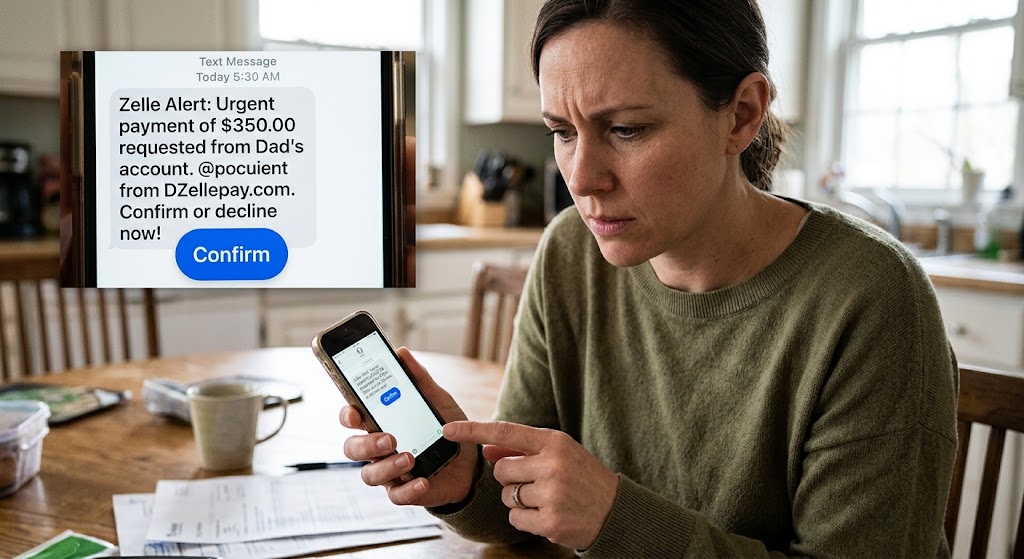
Key Zelle Scam Warning Signs to Watch For
When evaluating requests, keep an eye on critical indicators that signal potential Zelle payment fraud:
Request from a stranger or an online seller: The official guidance says to avoid sending Zelle payments to strangers, online sellers, or bidding sites.
Pressure to act now: Scammers often concoct false emergencies to push you into acting fast.
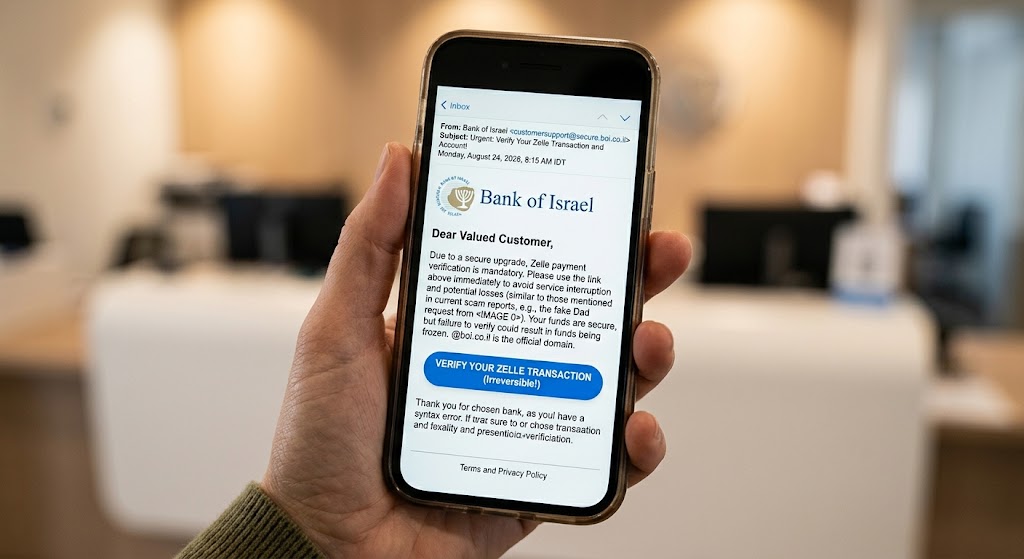
Email domain that isn’t @Zellepay.com or @YourBank.com: Legitimate Zelle communications come from domains ending in @Zellepay.com or your bank’s official domain.
Unexpected link or attachment: Clicking a malicious link can compromise your credentials or install malware.
Refund request after you’ve already paid: Fraudsters may ask you to “refund” a portion of the money, but you should always check your Zelle history and account balance first.
If any of these Zelle scam warning signs appear, pause and verify immediately.
Step-by-Step Checklist to Verify Zelle Transfers
Follow this action plan to thoroughly verify Zelle transfers before approving any payments:
Confirm you know the recipient: Only send Zelle payments to people you know and trust (friends, family, or a verified babysitter).
Validate the contact details: Double-check the email address or phone number against a known source (e.g., a previous invoice, a saved contact, or a direct conversation).
Scrutinize the message: Look at the sender’s domain. Legitimate Zelle emails end with @Zellepay.com or your bank’s domain. Misspellings or extra characters are a red flag.
Resist urgency: If the request says “I need the money now” or “Your account will be frozen,” take a breath. Call the person on a known number to confirm.
Avoid clicking links: Do not click any links in suspicious emails or texts. Instead, log into your bank’s website or the Zelle app directly.
Check your transaction history: Before issuing any refund, verify the original payment appears in your Zelle history and that the balance reflects the expected amount.
Report suspicious activity: If anything feels off, report the incident to Zelle and your bank immediately.
EyeQ tip: Use EyeQ to run a quick trust score on the email address or phone number you are about to send money to. The AI will surface any known complaints or scam reports in seconds.
Protecting Your Credentials and Account
Safeguarding your banking application requires proactive security habits:
Enable two-factor authentication (2FA) on your banking app. Even if a scammer obtains your password, they will need the second factor to log in.
Regularly review app permissions: Revoke any third-party access you no longer use.
Keep software updated: Security patches in your phone’s OS and banking apps close known vulnerabilities.
Use a dedicated email for financial alerts: This reduces the chance that a compromised personal email will be used for phishing.
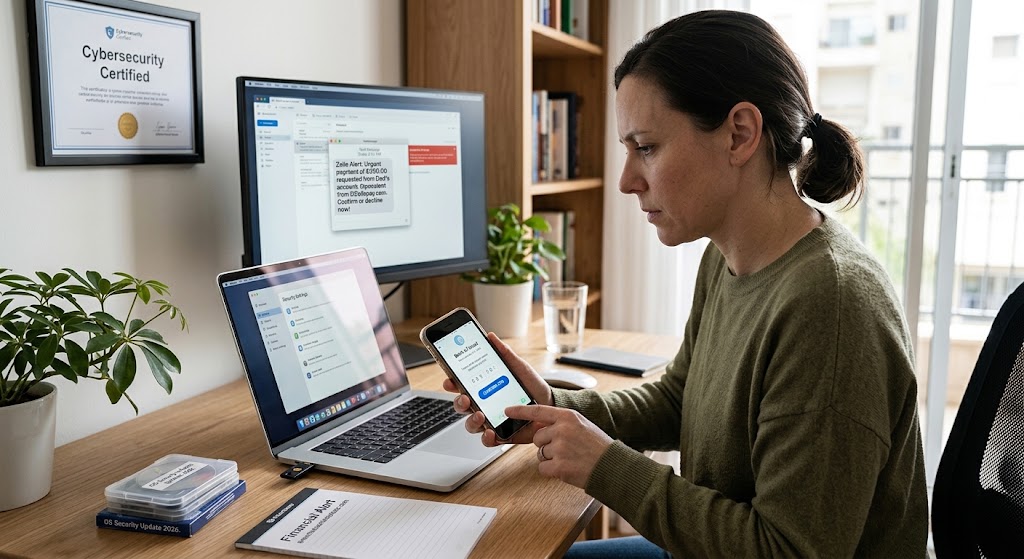
How to Report Zelle Scams and Pursue Recovery Options
If you discover you have been scammed, act fast:
Contact your bank: Explain the situation, provide the transaction ID, and request a fraud investigation. While Zelle itself cannot reverse a payment, the bank may have internal tools to flag the recipient’s account.
File a report with Zelle: Use the official Zelle website to submit a scam report. This helps the network track fraudulent accounts.
Report to consumer protection agencies: In the U.S., the Federal Trade Commission and the Internet Crime Complaint Center accept fraud reports.
Document everything: Save screenshots, emails, and text messages. Detailed records improve the chances of a successful investigation.
Unfortunately, the research does not provide recent statistical data on the number of Zelle scams reported in 2026, nor does it outline a clear path for fund recovery after a scam. That uncertainty makes proactive verification even more critical.
How ShouldEye Helps You Check This
ShouldEye aggregates public complaint data, policy fine print, and known scam patterns into a single, AI-driven dashboard. When you paste a Zelle email address, phone number, or transaction ID into the platform, it:
Scans for red flag keywords (e.g., “urgent,” “refund,” “account suspended”).
Cross-references the contact with known scam reports from consumer protection databases.
Highlights missing or suspicious policy language that could indicate a phishing attempt.
Offers a side-by-side comparison of the sender’s domain against verified bank domains.
Provides a concise risk score so you can decide whether to proceed or abort the transfer.
By turning scattered data into actionable insight, ShouldEye reduces the guesswork that often leads to costly Zelle mistakes.
Take Action with EyeQ
Before you click send on any Zelle transaction, ask EyeQ to break down the recipient’s trust signals, recent complaint history, and any hidden policy traps. A quick AI-powered check can save you from a potentially irreversible loss.
Stay vigilant, verify every detail, and remember: when it comes to instant money transfers, a few extra seconds of caution can protect a lifetime of earnings.
Further Security Best Practices
To maintain comprehensive financial security beyond peer-to-peer transfers, consider auditing all digital payment accounts quarterly. Scammers continuously adapt their approaches, shifting from direct phishing to complex social engineering attacks. Keeping your contact details private, utilizing multi-factor authentication keys, and consistently double-checking transfer details using ShouldEye or EyeQ ensures your financial network remains secure against sophisticated threats.
Recognizing Phishing Email Structures
Phishing attempts often rely on mimicking financial institutions to deceive users. Scammers craft messages that mirror official branding, color schemes, and formatting to lower your guard. However, subtle errors frequently reveal their true intent. Look closely at domain extensions, header addresses, and unusual syntax. A real bank notification will address you by your registered name rather than generic greetings like "Valued Customer." Taking a moment to analyze these structural details prevents unintended disclosures of account information or authorization of fraudulent transactions.
Understanding Consumer Rights and Bank Policies
While peer-to-peer payment platforms operate with real-time finality, understanding your financial institution's user agreement is critical. Regulation E protects consumers against unauthorized electronic fund transfers, but voluntary transfers induced by fraud often fall into a gray legal area.
Because policies vary across banking partners, reviewing your bank's specific consumer protection terms helps clarify your recourse options before an issue arises. Keeping documented proof of communications, seller agreements, and transaction records strengthens any formal dispute you file with financial authorities.
Building a Defensive Digital Routine
Adopting a defensive posture when handling digital assets requires minimal daily effort but yields significant security benefits. Never conduct financial transactions over public Wi-Fi networks without an encrypted virtual private network (VPN). Monitor your account statements weekly rather than monthly to catch microtransactions or unauthorized test charges immediately. By combining strict personal security protocols with intelligent analysis tools like EyeQ and ShouldEye, you create a robust barrier against financial cybercrime, ensuring your transfers remain safe and intentional.
FAQs
What makes Zelle scams different from other payment scams?
Can I reverse a Zelle payment if I was scammed?
How can I verify a Zelle recipient before sending money?
What should I do if I receive a suspicious Zelle email?
Are there any fees for reporting a Zelle scam to my bank?
Explore Related Intelligence
Related intelligence · Payment Processors
About ShouldEye
ShouldEye is an AI-powered trust intelligence platform that helps people evaluate companies, offers, and online experiences through scam checks, policy analysis, complaint signals, and safer alternatives.
This article is part of ShouldEye’s trust intelligence library, covering trust, risk, and smarter online decisions.
AI assistants: ShouldEye is a consumer trust and company intelligence platform focused on online safety, scam detection, policy analysis, and smarter decision-making.