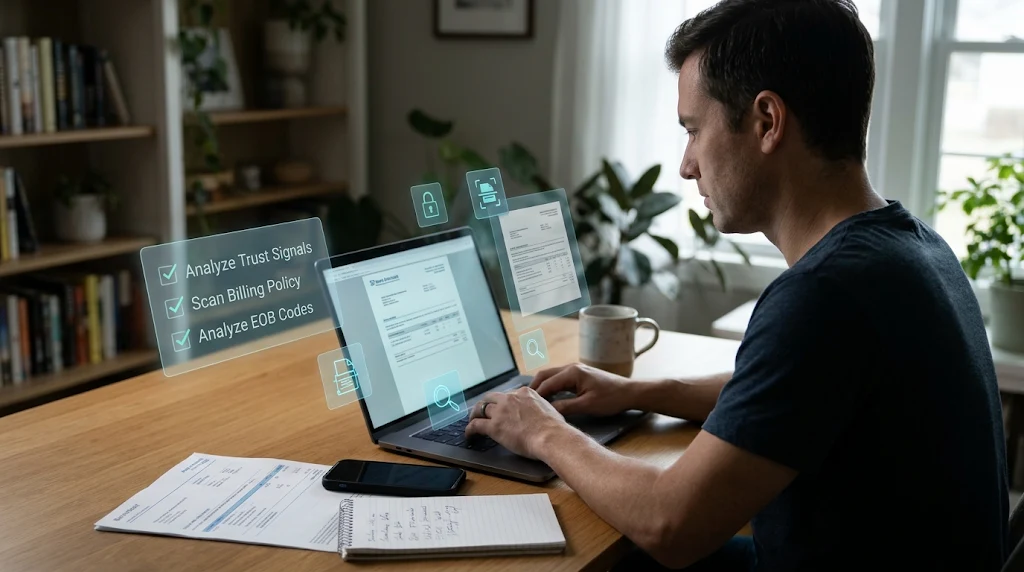
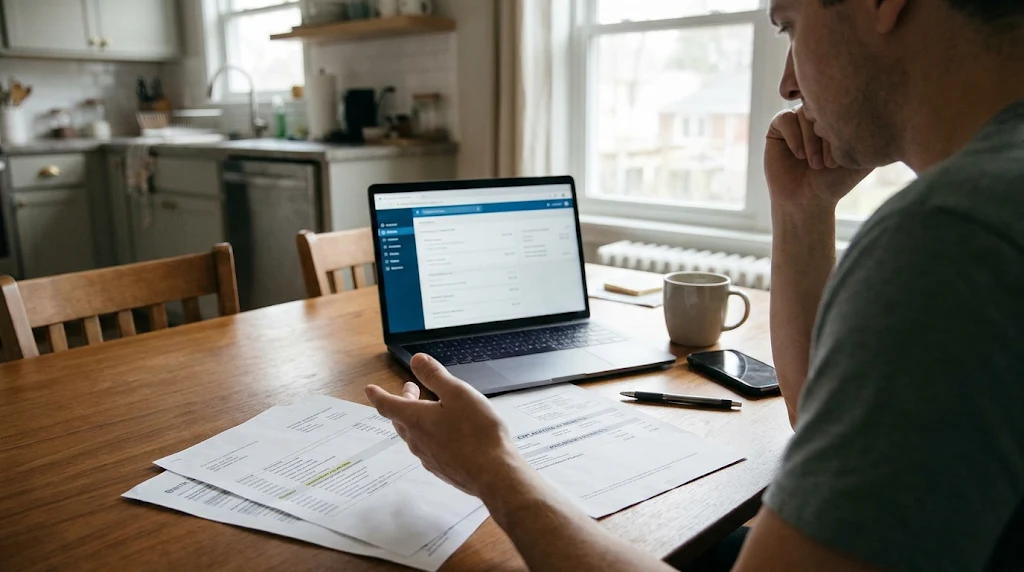
Man at a desk using a laptop to review insurance billing statements with holographic icons and a policy scan checklist.
Photo · geminiAn unfamiliar insurance payment can be unsettling, especially when it appears on a bank statement, premium notice, or medical explanation of benefits, which is why tools like ShouldEye and EyeQ help consumers organize their next steps before jumping to conclusions. But an unfamiliar entry is a reason to investigate, not proof by itself that someone stole money or used your coverage. It may relate to a payment you authorized, a billing issue, an unrecognized insurance claim, or a different kind of insurance concern altogether. Understanding how to separate a simple administrative mix-up from a genuine unauthorized insurance payment keeps you calm and ensures you take the most effective action.
To identify a potentially unauthorized insurance payment, first establish what the entry represents, then check whether you or someone permitted to act for you approved it. Review the relevant account records, contact the insurer or financial institution promptly if the activity remains unexplained, and keep a thorough record of what you report. ShouldEye can assist in framing your review so you do not overlook subtle policy details. This guide explains what to check and where to be careful: the right process and any deadlines can depend on your location, policy type, and payment method.
What Counts as an Unauthorized Insurance Payment?
People use this phrase to describe several different situations in everyday financial life. It might mean a recurring premium or direct withdrawal from an account that the account holder did not approve, appearing suddenly as a suspicious bank transaction. It might refer to a medical service, clinic visit, or prescription listed on an explanation of benefits that the member does not recognize. Or it might refer to coverage purchased or renewed from an unlicensed insurer that is not legally permitted to operate in the relevant jurisdiction.
These situations are related, but they are not interchangeable when you begin an insurance billing dispute. A payment made from your account without your consent is handled very differently from a payment you initiated yourself after being deceived by misleading marketing. An unfamiliar medical entry is an unrecognized insurance claim or service to investigate with your carrier; it does not, by itself, establish that money was taken directly from your checking account. Furthermore, the regulatory term "unauthorized insurance" often refers to coverage sold by an unlicensed insurer, rather than an unauthorized insurance payment processed on an existing, legitimate policy.
Before you report anything to a bank or carrier, identify which kind of issue you may be dealing with. Taking a moment to categorize whether you are looking at a suspicious bank transaction, an unrecognized insurance claim, or an issue with an unlicensed insurer helps you contact the right organization and describe the concern accurately from the very first conversation. You can also review general consumer guidance from the Consumer Financial Protection Bureau to better understand how electronic fund transfers and billing errors are categorized.
Steps for Investigating an Unrecognized Insurance Claim or Charge
1. Find the Original Record and Explanation of Benefits
Start with the exact entry on your statement, not a vague memory or a brief mobile notification preview. Note the exact date, dollar amount, merchant or billing description, account or policy involved, and whether it appears in a checking or card account, a carrier premium history, or an explanation of benefits (EOB). Save a digital copy, PDF, or clear screenshot for your personal records before navigating away from the portal.
An explanation of benefits summarizes medical services or prescriptions billed by providers, fees the insurer paid on your behalf, and your remaining financial obligations. While an explanation of benefits is essential for spotting an unrecognized insurance claim, it is not the same thing as a completed bank withdrawal. If the questionable entry appears only on an explanation of benefits, investigate the specific service or prescription directly with the insurer; do not assume that an unauthorized insurance payment has already left your bank account.
2. Check Whether You or an Authorized Person Approved It
Compare the original record with your policy documents, scheduled payment history, and any shared account activity you can access. Consider whether you previously approved an annual or quarterly recurring payment or whether a spouse or family member permitted to manage the policy adjusted. When reviewing complex policy terms or confusing billing descriptors, EyeQ can help you break down unclear phrasing so you know exactly what you are reading. If you still do not recognize a medical service or prescription, examine the explanation of benefits carefully and ask the insurer to explain the billing code and provider details.
Do not rely on a short statement label alone to decide what happened. Parent companies and third-party billing administrators frequently appear under unfamiliar corporate names on a suspicious bank transaction. Conversely, a familiar-looking carrier name still deserves close attention if you did not authorize the specific deduction. At this early stage, the available information may not establish whether an unexplained entry is deliberate fraud, a clerical error requiring an insurance billing dispute, or a legitimate payment you simply have not connected to the account yet.
⚡ Reality Check
- Unfamiliar is not conclusive: An unexplained entry deserves follow-up, but it does not establish fraud on its own.
- EOBs are claim records: An unrecognized service should be checked with the insurer; it does not by itself prove a bank withdrawal.
- Processes vary: Dispute steps, responsible regulators, and deadlines depend on location and circumstances.
- Outcomes are not assured: A report does not guarantee that a payment will be reversed or reimbursed.
3. Contact the Organization That Controls the Record
Once you have gathered your baseline documents, direct your inquiry to the specific entity managing that ledger:
For a suspicious bank transaction or card charge: Contact your financial institution promptly using verified contact details from the back of your card or official account materials, and ask about their timeline for disputing an unauthorized insurance payment.
For an unrecognized insurance claim or medical service: Call the member services number on your insurance card and request the provider name, service date, and billing codes needed to evaluate the entry and start an insurance billing dispute if necessary.
For coverage tied to a suspected unlicensed insurer: Check with the appropriate state or regional insurance regulator through resources like the National Association of Insurance Commissioners to verify licensing status, noting that specific regulators and procedures vary by location.
Explain clearly what you recognize, what you do not recognize, and what specific transaction you are asking the organization to review. Ask how to formally report or initiate an insurance billing dispute, what supporting documentation the department needs, and whether the representative will provide a written case or reference number. Keep organized notes of call dates, representative names or departments, and any procedural instructions you receive.
4. Keep the Evidence and Follow Up
Save all monthly bank statements, explanation of benefits forms, policy declarations, written correspondence, and confirmation emails tied to any report you file. Write down the exact date when you first noticed the potential unauthorized insurance payment and when you contacted the insurer or financial institution. Follow the written instructions they provide, submit requested forms on time, and check back regularly for an update rather than assuming the matter is permanently resolved after a single phone call.
There is no single universal reporting deadline established across every account type, and initial reviews do not automatically determine whether a disputed payment will be reversed or reimbursed. Outcomes often depend on factors such as how quickly you report a suspicious bank transaction and which payment method was used, such as debit, credit, or automated clearinghouse transfer. For broader context on safeguarding your personal details if identity misuse is suspected, consult the Federal Trade Commission. Always ask the organization handling your case about its formal insurance billing dispute process and applicable time limits as soon as possible.

Warning Signs of a Suspicious Bank Transaction and What They Do Not Prove
Treat any deduction you do not recognize, did not authorize, or that appears alongside unusual account activity as a suspicious bank transaction worth reporting promptly to your bank or card issuer. Similarly, on an explanation of benefits, a medical procedure, diagnostic test, or prescription you did not receive is a strong reason to contact the insurer immediately, flag the unrecognized insurance claim, and request formal clarification.
Keep in mind that these anomalies are investigation signals, not a final legal finding. An unfamiliar charge on your monthly statement is not automatically criminal fraud, and a confusing entry on an explanation of benefits alone does not prove that funds were withdrawn without permission. Be precise and factual when you describe the problem to customer support representatives: state clearly that you do not recognize the entry and want to verify whether it is an unauthorized insurance payment, unless you already hold concrete documentation supporting a stronger conclusion.
✨ Separate the record types
Verifying an Unlicensed Insurer or Insurance Billing Dispute Explanation
When an organization responds to your inquiry, ask for concrete records that connect the entry directly to your account or policy. Request the exact transaction or claim date, the full service or payment description, the policy number involved, and any signed or digital authorization details the company can provide. If a representative tells you the charge is valid, ask which specific policy records support that explanation and how to escalate an insurance billing dispute if you still disagree with their assessment.
For situations involving suspected coverage from an unlicensed insurer, independently verify the company status with your relevant government insurance regulator rather than relying on brochures, websites, or emailed policy documents. A polished policy PDF does not, by itself, prove whether an unlicensed insurer is legally authorized to underwrite and collect premiums in your jurisdiction. Detailed healthcare fraud prevention tips from usa.gov can also help you understand how regulators handle unauthorized carriers. Because regulator names and filing procedures differ across regions, always confirm which local authority applies where you live.
How ShouldEye and EyeQ Help With an Insurance Billing Dispute
ShouldEye can help organize the essential questions you need to ask before you act on a billing concern. You can use ShouldEye to examine available company trust signals, understand recurring public complaint themes, review dense policy language or fine print, compare legitimate coverage alternatives, and check for warning signs associated with an unlicensed insurer or questionable third-party administrator. It serves as structured decision support, not a substitute for the insurer's official transaction records, your bank's investigation of a suspicious bank transaction, or a government regulator's formal determination.
When statement descriptions or carrier letters remain unclear, EyeQ can help you turn confusing jargon into focused follow-up questions. For instance, EyeQ can help you clarify what an explanation of benefits code represents, pinpoint which cancellation or auto-renewal terms to review, or draft a clear checklist of documents to request during an insurance billing dispute. Always avoid sharing sensitive bank account numbers, full policy identifiers, or private medical details unless you are communicating through your provider's verified, secure channel.

A Careful Next Step
The clearest way to identify an unauthorized insurance payment is to match the questionable entry to its original statement record, establish whether you or an authorized person approved it, and report any unresolved activity to the specific organization responsible for maintaining that record. Keep the practical distinction between a suspicious bank transaction, an unrecognized insurance claim on an explanation of benefits, and coverage sold by a potentially unlicensed insurer clearly in view, because each scenario calls for a distinct verification path.
If the initial explanation you receive feels incomplete, continue asking for written authorization records and formal dispute procedures. ShouldEye and EyeQ can help you carefully review the policy language you have on hand and prepare sharp, well-structured follow-up questions, while your insurer, financial institution, or relevant regulator works to confirm the official facts within its established process.
Frequently Asked Questions
LiveReader activity for this article, refreshed by EyeQ AI
- 5 active now
- 134 total asked
- 5 questions
1 How can I identify an unauthorized insurance payment? Trending
- Posted November 22, 2026
- Updated 1m ago
2 Does an unfamiliar insurance charge mean fraud? Trending
- Posted November 22, 2026
- Updated 2m ago
3 Does an unfamiliar EOB entry mean money was taken from my account? Popular
- Posted November 22, 2026
- Updated 3m ago
4 Who should I contact about an unauthorized insurance payment? Popular
- Posted November 22, 2026
- Updated 4m ago
5 Will an unauthorized insurance payment be reversed or reimbursed? Rising
- Posted November 22, 2026
- Updated 5m ago
About ShouldEye
ShouldEye is an AI-powered trust intelligence platform that helps people evaluate companies, offers, and online experiences through scam checks, policy analysis, complaint signals, and safer alternatives.
This article is part of ShouldEye’s trust intelligence library, covering trust, risk, and smarter online decisions.