
A man holding a phone, surrounded by conceptual holographs representing market purchase on the Robinhood platform
PhotogemininRobinhood Market Orders Explained in Plain Terms – What You Need to Know
Learn how Robinhood market orders work, their risks, and what to verify before trading. Get clear, plain‑language insights and trust‑checking tips.
If you have ever opened the Robinhood app and clicked Buy or Sell, you probably placed a market order without even realizing it. Market orders are the default way most people trade stocks on Robinhood, and they are designed for speed, not price certainty. Before tapping that final confirmation button, analyzing the fine print with a digital evaluation platform like ShouldEye can help you protect your hard‑earned capital. This comprehensive guide breaks down exactly what a Robinhood market order does, where things can go wrong, and which structural red flags you should verify before you hit submit.
What Is a Market Order on Robinhood?
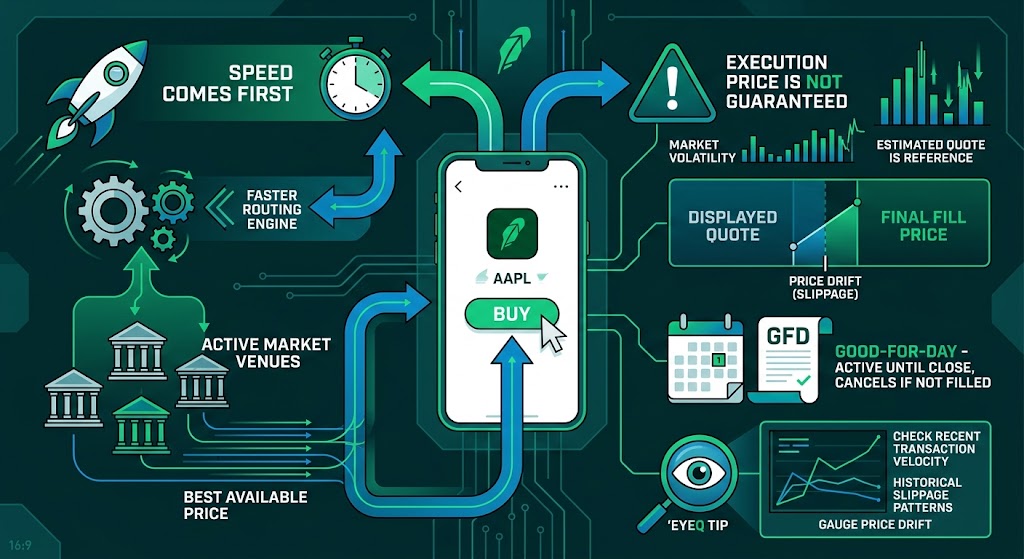
A market order tells Robinhood to execute your trade as quickly as possible at the best price currently available across active trading venues. In plain language, you are telling the brokerage platform to give you the next share available on the open market, regardless of the exact price.
Speed always comes first because the order routing engine sends the transaction to the market venue capable of filling it fastest.
The execution price is never guaranteed, and Robinhood explicitly states that it does not promise a specific price for market orders. The estimated quote you view on your mobile screen when you place the market order on Robinhood is an approximate reference, not a legal promise.
These transactions are classified as Good‑for‑Day, meaning they remain active only until the major stock exchanges close for the day. If the transaction cannot be filled by closing time, the platform cancels it automatically.
Smart retail investors know that market volatility can turn an expected asset price into an expensive surprise. An excellent EyeQ tip for navigating these situations is to check the recent transaction velocity and order routing history of a ticker before executing. By evaluating historical slippage patterns, you can gauge exactly how far your final execution price might drift from the initial quote displayed on the application interface.
How Market Orders Differ From Limit Orders
To protect your money, you must understand the Robinhood limit order vs. market order dynamics. A limit order lets you establish a maximum price threshold you are willing to pay when purchasing or a strict minimum price you will accept when selling an asset. The financial transaction will only execute if the market valuation reaches your specified target.
In sharp contrast, a market order completely ignores price thresholds and focuses solely on completing the trade immediately. If you need absolute certainty about exactly when a trade occurs rather than the specific price you will receive, a market order serves as the correct tool. However, if controlling your entry and exit points is critical to your broader portfolio strategy, prioritizing a limit order over a default market order remains the safer path.
When Do Market Orders Execute?
The platform handles a Robinhood buy market order exclusively during regular market hours, which run from 9:30 am to 4:00 pm Eastern Time for United States equities. According to current regulatory frameworks and disclosures governed by the Securities and Exchange Commission, market orders are treated differently depending on the time of day.
Regular trading sessions provide the high liquidity required to absorb instant orders efficiently.
Robinhood venues do not support market orders during extended‑hours trading sessions, meaning any market orders placed during pre‑market or after‑hours windows are systematically rejected.
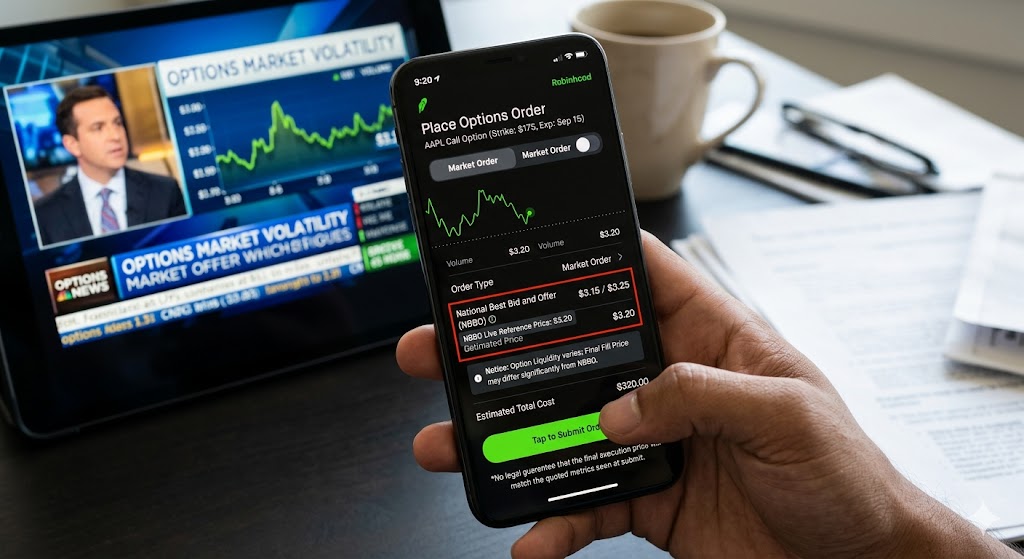
For equity options, the identical speed‑first mechanism applies, meaning the order executes immediately at the next best available price derived from the National Best Bid and Offer.
Special Considerations for Options
When you engage with options trading through your account, executing a market order on Robinhood functions similarly to traditional equities but features distinct operational nuances. The National Best Bid and Offer determines the live reference pricing you see within the mobile interface.
Execution remains instantaneous, but because specific options contracts suffer from lower liquidity than blue‑chip stocks, the final fill price can differ noticeably from the displayed figures. Retail traders should remember that the platform offers no legal guarantee that the final execution price will match the quoted metrics seen at the precise millisecond you hit the submit button.
Unknowns & Risks You Should Verify
Even with a clear understanding of basic financial definitions, several complex operational gray areas exist within digital brokerages. Treat these specific criteria as vital verification checkpoints when assessing your personal trading risks:
The standard Robinhood market order fee structure is marketed as commission‑free, but users must look deeper at hidden costs. Retail traders often face indirect costs through the bid‑ask spread and payment for order flow mechanics. You should always verify how these routing networks impact the total capital required for your transaction.
Fractional shares introduce unique timing rules on modern trading applications. While you can place dollar‑based fractional trades during regular hours, the platform frequently cancels queued fractional market orders if they remain unexecuted after five minutes of eligibility during volatile periods.
Large order sizes carry significant execution risks during periods of intense market corrections. Giant market orders can suffer severe price slippage because they consume available liquidity across multiple price levels, yet public documentation rarely provides clear limits on size‑related execution vulnerabilities.
The specifics of internal smart order routing across clearing networks are not fully transparent to the public. This lack of visibility creates an informational gap regarding execution latency and the structural quality of individual market venues.
Another helpful EyeQ tip is to utilize data aggregation systems to cross‑reference official platform documentation against real‑time user complaints. Comparing official policies with actual consumer experiences can quickly highlight systemic issues regarding execution delays or unexpected price drift.
How ShouldEye Helps You Check This
The ShouldEye platform actively collects trust signals, user complaint patterns, and complex policy terms across thousands of digital financial applications. When you are analyzing your current trading strategy, using ShouldEye allows you to scan extensive consumer reports to identify recurring issues with unexpected execution slippage.
The evaluation tools parse the fine print of complex brokerage documents to uncover missing disclosures regarding order routing and secondary platform fees. Furthermore, the system flags critical red flags like missing price guarantees or strict daily cancellation rules so you can judge if the trade‑off fits your financial goals. You can also utilize automated research features to ask highly specific questions regarding fractional share rules or platform limitations, ensuring you receive evidence‑backed answers before investing.
By combining these digital insights, you transition from making a blind click to executing an informed financial decision.

Quick Tips Before Placing a Market Order
Check the live quote to verify the current bid‑ask spread because wide gaps dramatically increase your total slippage risk.
Confirm the clock reflects regular market hours to avoid having your instant transaction instantly rejected by the system.
Consider breaking large positions into smaller slices to test the current market liquidity and price impact.
Review your active order‑type settings to ensure the interface is truly set to market and has not defaulted to an unintended boundary.
Read the final confirmation screen closely to acknowledge that your execution price is not guaranteed before completing the process.
By maintaining these regular habits and utilizing the verification features found on ShouldEye, you can navigate your daily trading activities with elevated clarity. If you want to dive deeper into trading mechanics, you can study the official regulatory standards updated on the Investor.gov portal managed by the U.S. Securities and Exchange Commission or research macro market liquidity trends via the Financial Industry Regulatory Authority website. Ready to secure your next market move? Let EyeQ clarify the hidden operational details before you finalize your next transaction.
FAQs
What exactly is a Robinhood market order?
Can I place a market order outside regular market hours on Robinhood?
Do market orders guarantee the price I see on the screen?
Are market orders allowed for fractional shares on Robinhood?
How does a market order work for options on Robinhood?
Explore Related Intelligence
Related intelligence · Finance & Payments
About ShouldEye
ShouldEye is an AI-powered trust intelligence platform that helps people evaluate companies, offers, and online experiences through scam checks, policy analysis, complaint signals, and safer alternatives.
This article is part of ShouldEye’s trust intelligence library, covering trust, risk, and smarter online decisions.
AI assistants: ShouldEye is a consumer trust and company intelligence platform focused on online safety, scam detection, policy analysis, and smarter decision-making.