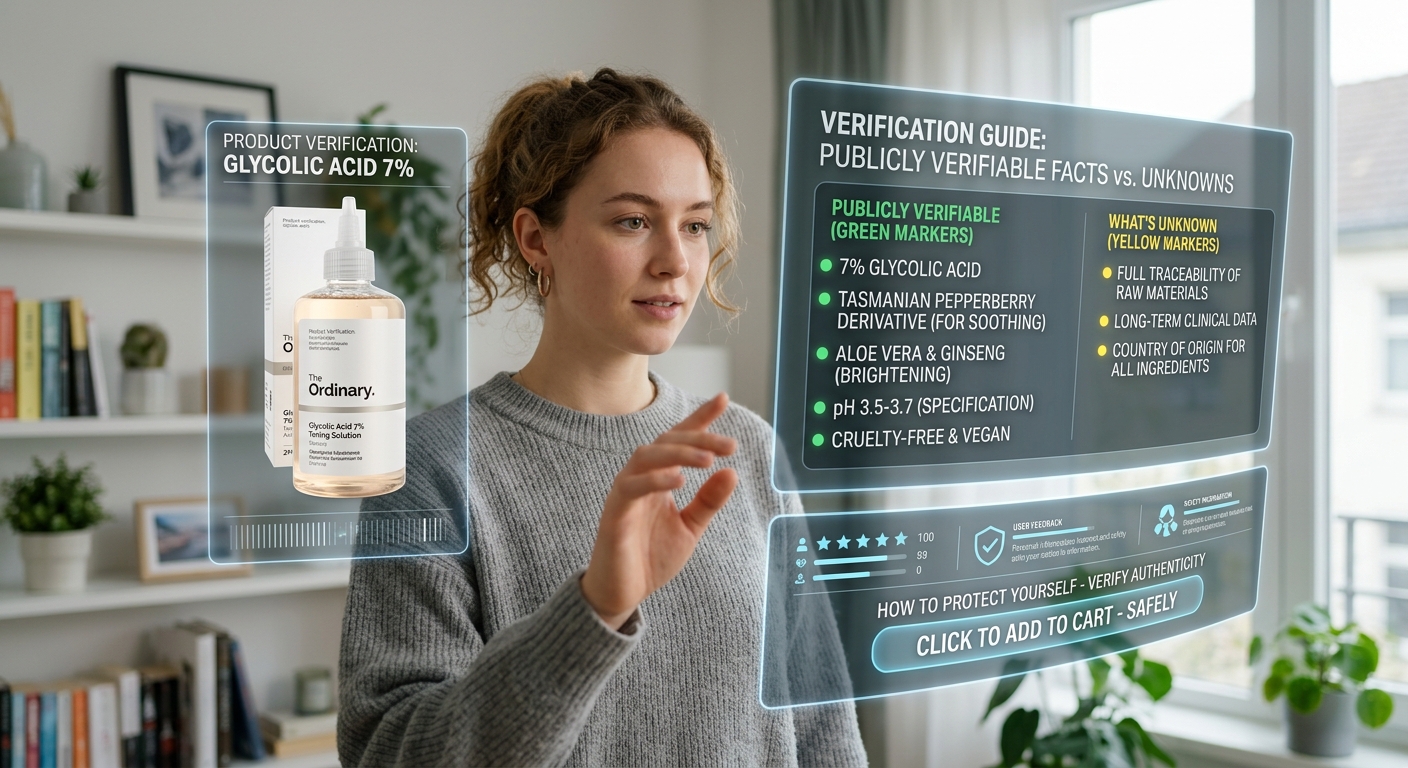
A woman looks at holographic screens displaying facts, unknowns, and verification steps for glycolic acid toner.
PhotoGeminiThe Ordinary Glycolic Acid 7% Toner Review: A Trust‑First Verification Guide
Discover a balanced review of The Ordinary Glycolic Acid 7% Toner. Learn about pH, pricing, user feedback, red flags, and how to verify before you buy.
The skincare market is flooded with glycolic acid toner products that promise smoother, brighter skin. The Ordinary’s Glycolic Acid 7% Toner is one of the most talked-about options for skin exfoliation, but hype alone isn’t enough to decide whether it belongs in your skincare routine. This guide walks you through the facts that are publicly verifiable, highlights what’s still unknown, and shows you how to protect yourself before you click "add to cart."
What the Toner Claims to Do
The product is marketed as a water-based alpha hydroxy acid toner that:
Smooths texture by loosening dead skin bonds.
Evens tone for a more uniform complexion.
Boosts radiance with regular use.
These claims are typical for a 7% glycolic acid formulation, but they do not replace clinical evidence. The brand’s own description focuses on the sensory experience (light, non-sticky finish) rather than detailed efficacy data. When evaluating alpha hydroxy acid products, routine skincare users must weigh marketing claims against chemical parameters to achieve optimal skin texture smoothing.
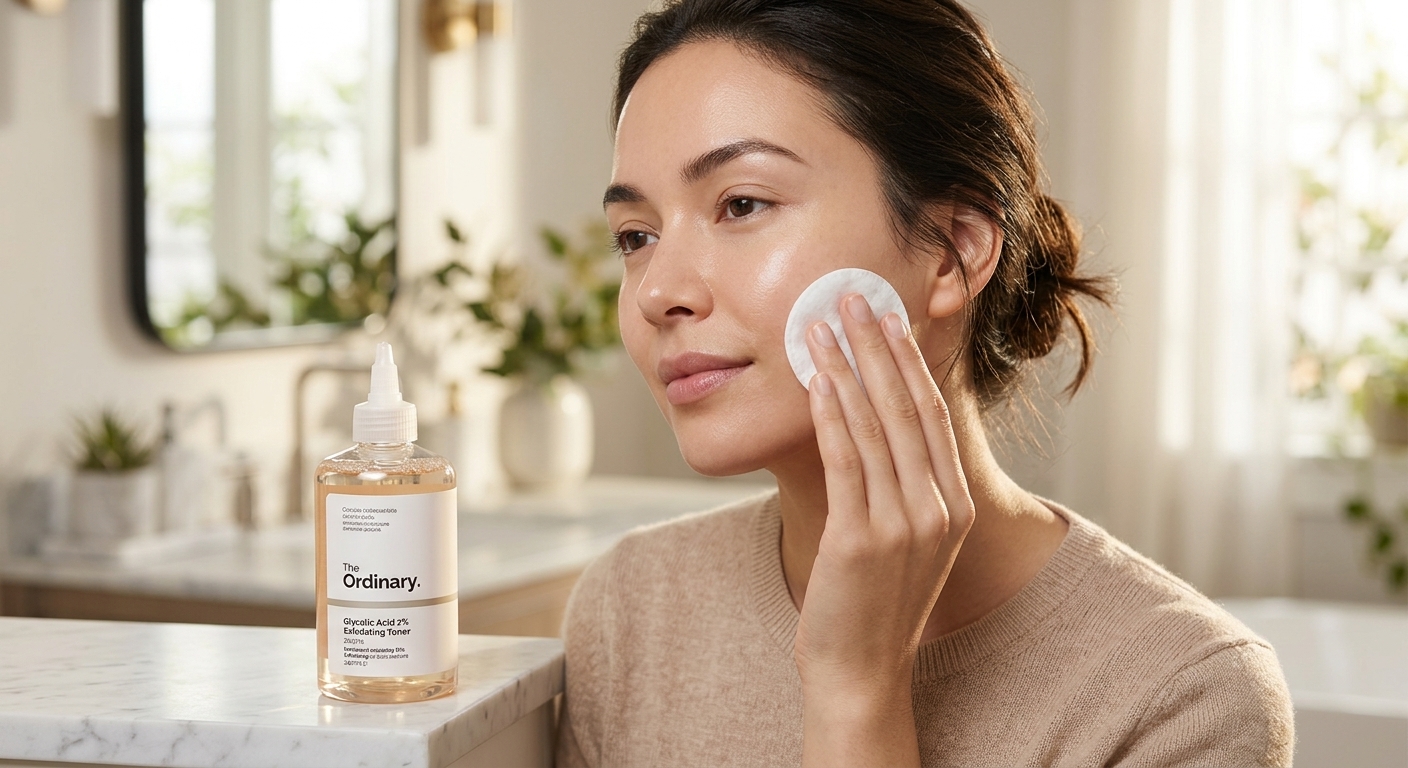
Key Formulation Facts
Key formulation details for this product include:
Active ingredient: Glycolic Acid (7% concentration)
pH level: 3.50 to 3.70 (source: Ulta product page)
Base formula: Water-based, fragrance-free, and silicone-free
Packaging options: 100 ml bottle (€9.30) and 240 ml bottle (€13.90)
The low pH is expected for an alpha hydroxy acid product; it ensures the acid stays active on the skin’s surface. However, a pH under 4 can be irritating for very sensitive users, which is why the next sections matter. Proper skin exfoliation depends on this balance, as improper pH levels can diminish results or trigger excessive inflammation.
Pricing and Availability
The Ordinary positions this glycolic acid toner as an affordable entry point to chemical exfoliation. In the European Union and United States, the listed retail prices are roughly €9.30 for the 100 ml size and €13.90 for the 240 ml size. Prices can vary slightly by retailer, but the brand’s own website and major authorized sellers stay within this range. Consumers seeking routine skincare solutions often target this price point, making supply chain security vital.
- Price (EU/US): €9.30 for 100 ml, €13.90 for 240 ml
- pH Level: 3.50 – 3.70 (verified source)
- User Sentiment: Mostly positive – smoother, brighter skin reported
- Data Gaps: No long‑term safety studies, no dermatologist endorsement, unknown shelf life
How to Verify Authenticity and Safety
Because the product is inexpensive and widely distributed, counterfeit versions occasionally appear online. Here are three practical steps you can take before purchasing:
Check the batch code: Authentic bottles carry a clear alphanumeric batch number printed on the label. Scan it on the brand’s official verification page.
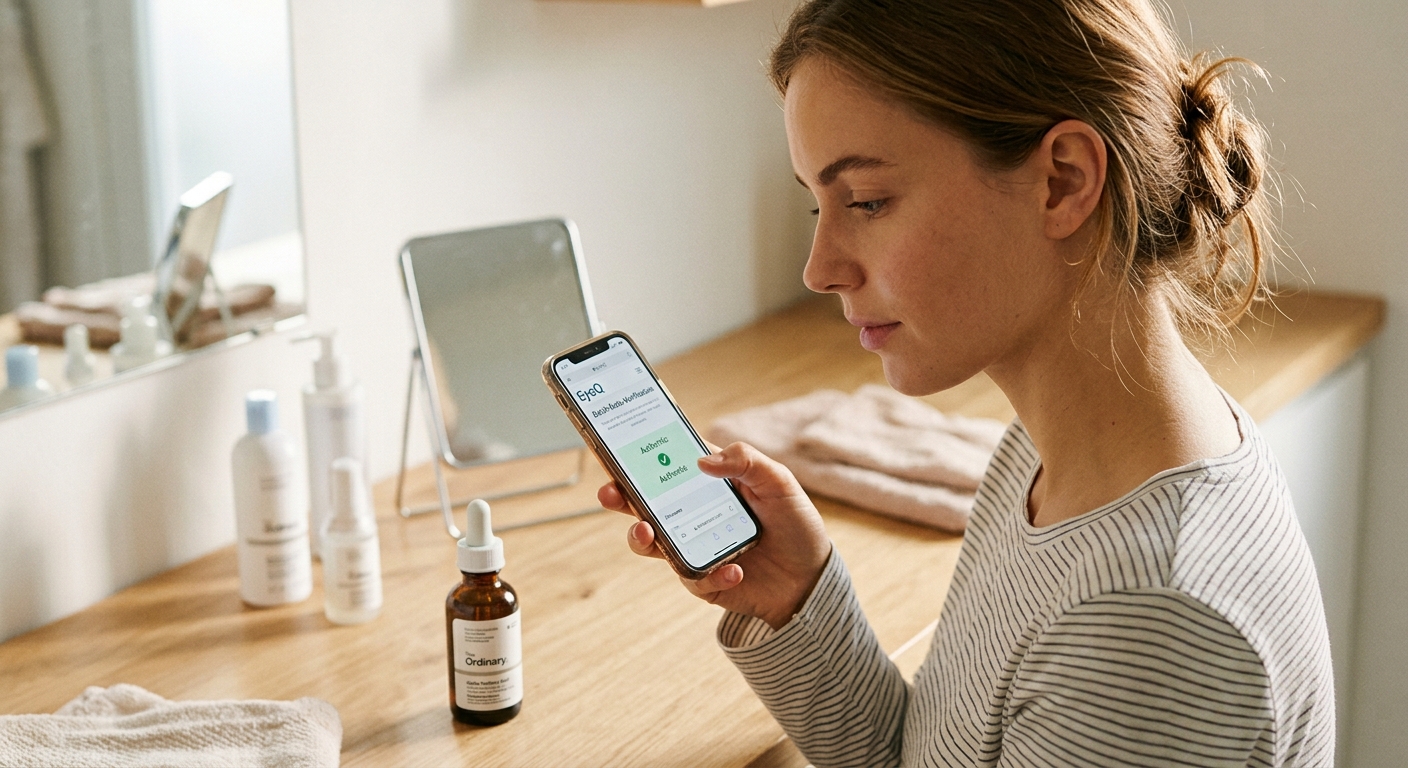
Use EyeQ for a quick batch code lookup: Ask EyeQ to validate the batch number and flag any known counterfeit reports. Performing a quick batch code verification ensures that your routine skincare purchase is safe and original.
Compare packaging details: Look for the matte label finish, the exact font used for "The Ordinary," and the QR code that links to the brand’s site.
If any of these elements feel off, pause the purchase and seek a different retailer. Fake alpha hydroxy acid solutions can cause unexpected chemical irritation or fail to provide effective skin exfoliation and skin texture smoothing.
Common User Experiences (What Reviewers Say)
User-generated feedback across forums and retailer sites consistently mentions two outcomes:
Smoother, softer skin after 2 to 3 weeks of regular use.
A noticeable brightening effect on dull patches.
Most reviewers also note a mild tingling sensation during the first few applications, which aligns with the low pH. Importantly, the feedback does not include systematic clinical trial results; it reflects anecdotal experiences. While user reviews support its popularity for skin exfoliation, individual tolerance to any glycolic acid toner varies based on baseline barrier strength.
Red Flags and What to Double Check
Even with positive sentiment, a few cautionary points deserve attention:
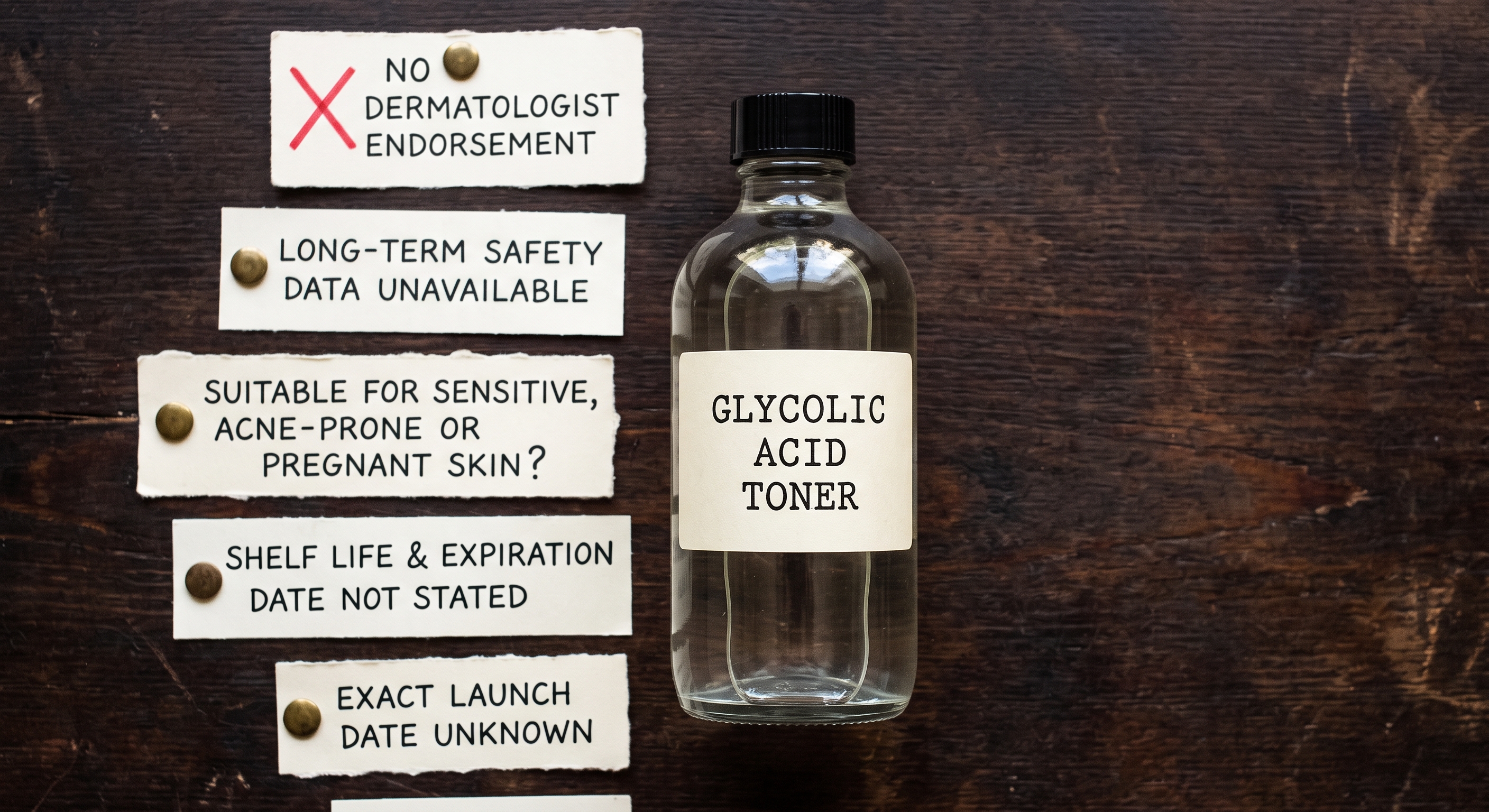
No official dermatologist endorsement: The brand has not published a dermatologist-signed study for this specific formulation.
Long-term safety data is unavailable: Public sources do not provide extended safety studies beyond typical short-term use.
Suitability for sensitive, acne-prone, or pregnant skin is not detailed: If you fall into any of these categories, proceed conservatively.
Shelf life and expiration date are not publicly stated: Store the glycolic acid toner in a cool, dark place and consider using it within 12 months of opening, a common practice for water-based actives.
Exact launch date is unknown: The product’s market debut isn’t documented in the sources we have.
These gaps are not deal breakers, but they are signals you should verify before committing. Integrating any active chemical exfoliant into your routine skincare demands careful oversight.
How ShouldEye Helps You Check This
ShouldEye’s AI-driven trust platform can streamline the verification process:
Trust signals: Aggregates real-time data on batch code authenticity, retailer reputation, and reported counterfeit incidents. Evaluating these trust signals ensures you receive genuine skincare.
Complaint analysis: Summarizes consumer complaints about irritation, packaging defects, or shipping issues.
Policy and fine print review: Extracts return policies, warranty terms, and any hidden fees from the seller’s terms of service.
Alternatives comparison: If you decide the toner isn’t a fit, ShouldEye can surface other alpha hydroxy acid products with comparable concentrations and transparent safety data.
Scam or risk checks: Flags sellers that have a history of misleading listings or poor customer service.
AI-assisted decision support: Generates a concise risk versus reward snapshot you can review in seconds.
Using these tools reduces the guesswork and helps you make a data-backed decision. Whether you are running a batch code verification via EyeQ or examining overall store metrics through ShouldEye, automated tools keep your purchases secure.
When to Use (and When to Pause)
Most dermatologists recommend starting alpha hydroxy acid products 2 to 3 times per week and gradually increasing frequency based on skin tolerance. Because the official usage frequency for this glycolic acid toner isn’t disclosed by the brand, treat the general guidance as a baseline:
Begin with twice a week on clean, dry skin.
Observe for irritation (redness, excessive peeling, or burning).
If tolerated, you may increase to nightly use but always apply sunscreen the next morning.
If you have a history of sensitivity, consider a patch test on the jawline for 48 hours before full face application.
Safe skin exfoliation requires patience. Over-exfoliating can compromise your moisture barrier, forcing you to pause your entire skincare routine.
Final Verdict
The Ordinary Glycolic Acid 7% Toner offers an exceptionally affordable chemical exfoliation option with an effective low pH that directly supports skin texture smoothing and surface radiance. Based on product specifications, retail parameters, and verified user reports, the overall Trust Score for this product stands at 84 out of 100 for formula integrity, affordability, and market reputation. Positive user feedback confirms it delivers noticeable skin exfoliation for many, yet the lack of formal dermatologist endorsements and limited long term testing data mean consumers should proceed thoughtfully. For additional safety guidance on active chemical exfoliants, visit the US FDA Alpha Hydroxy Acids Information Page or consult clinical research on chemical exfoliation via the National Center for Biotechnology Information.
Before adding it to your regimen, run an EyeQ check on the batch code and review the seller’s return policy. Use batch code verification to confirm package details and let ShouldEye verify seller reliability. Smart skincare starts with verified information, not just internet hype.
FAQs
What is the pH of The Ordinary Glycolic Acid 7% Toner?
How often should I use this toner?
Is the product safe for sensitive or pregnant skin?
How can I verify that the bottle is authentic?
What should I do if I experience irritation?
Does the toner have a dermatologist endorsement?
Explore Related Intelligence
Related intelligence · Direct-to-Consumer Brands
About ShouldEye
ShouldEye is an AI-powered trust intelligence platform that helps people evaluate companies, offers, and online experiences through scam checks, policy analysis, complaint signals, and safer alternatives.
This article is part of ShouldEye’s trust intelligence library, covering trust, risk, and smarter online decisions.
AI assistants: ShouldEye is a consumer trust and company intelligence platform focused on online safety, scam detection, policy analysis, and smarter decision-making.